Your cart is empty
Looks like you haven't added anything to your cart yet







Best Custom Apparel for Small Business: 2026 Guide
Table of Contents
- Quick Comparison: Best Custom Apparel for Small Business
- Custom Business Shirts: What to Look For
- Custom Embroidered Corporate Apparel for Client-Facing Teams
- Custom Company Uniforms That Survive Daily Wear
- How to Evaluate Custom Apparel Providers for Small Businesses
- Total Cost Breakdown: What You'll Actually Pay
- Common Mistakes When Buying Custom Apparel
- Conclusion: Choosing the Right Custom Apparel for Your Business
- Frequently Asked Questions
Last Updated: October 9, 2026
Quick Comparison: Best Custom Apparel for Small Business
Choosing the best custom apparel for small business comes down to three things: what your team actually wears, how the decoration holds up, and what you pay per item.
This guide answers those questions directly, breaking down shirts, polos, hats, and outerwear, comparing decoration methods, and showing a transparent cost picture.
Quick picks from our catalog:
- Best everyday shirt: Customized DTF Shirt with your own logo, $15.00, soft spun cotton with a full-color DTF print
- Best value tee: DTF Gildan 2000 Soft Style Shirts, $15.00, 100% US cotton, image printed 10 inches across
- Best client-facing polo: K100 Port Authority SuperPro React Polo, $29.99, stain-releasing and snag-resistant
- Best uniform polo: Snag Resistant Polo Corner Stone, $29.95, built for event staff with mic clips and pen pockets
Custom Business Shirts: What to Look For
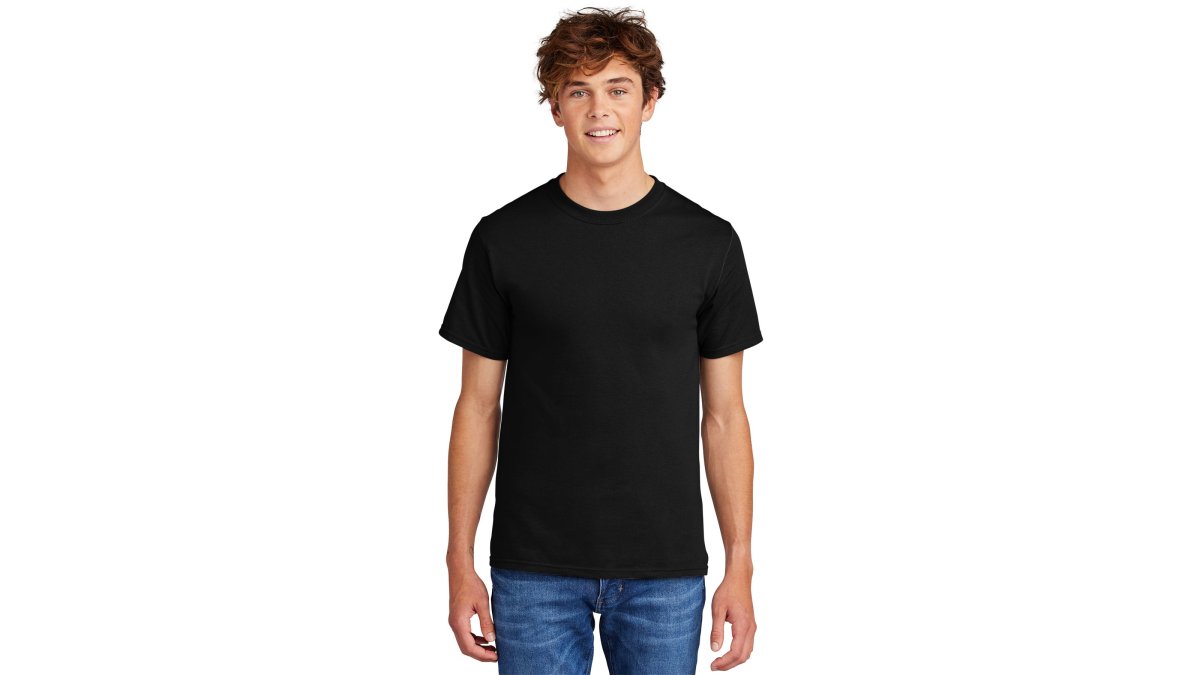
Custom business shirts are the foundation of any branded clothing program, and fabric weight is the first thing to check. A 6-ounce cotton tee feels substantial; a 4-ounce shirt feels thin after a few washes. Look for reinforced collars, taped neck and shoulders, and tag-free labels.

Our Customized DTF Shirt with your own logo covers the basics: 6.1-ounce soft spun cotton, a 1x1 rib knit collar, and shoulder-to-shoulder back neck tape. The DTF Gildan 2000 Soft Style Shirts add a 6-ounce, 100% US cotton option with a classic fit and recycled tear-away label.

A common mistake is buying on price alone and ignoring the collar and seams. Those are the first things to fail.
DTF Printing vs. Embroidery: Which Holds Up Better
DTF printing wins for full-color logos, photos, and detailed artwork, handling gradients and fine text. Embroidery wins for durability and a traditional corporate look, resisting fading and abrasion better on heavy fabrics like pique polos and jackets.
Match the method to the garment: DTF for cotton tees and detailed logos.
Custom Embroidered Corporate Apparel for Client-Facing Teams
For client-facing teams, we recommend the K100 Port Authority SuperPro React Polo at $29.99, stain-releasing, snag-resistant, and easy care, so it still looks professional after a long day on site.
For a lighter, more sustainable option, the lQK 75 Performance Polo at $14.99 uses spin-dyed polyester that holds color without fading.
For a premium look, the Adidas Performance Piqué Polo at $69.99 is made from 100% recycled polyester with a hydrophilic finish.
Custom Company Uniforms That Survive Daily Wear
Custom company uniforms have to survive real work: repeated washing, snags, and stains. The Snag Resistant Polo Corner Stone at $29.95 is snag-proof, moisture-wicking, and odor-fighting, with mic clips and dual pen pockets for event and security staff.
The K100 polo at $29.99 adds stain release, which matters if your team handles food or works outdoors.
For outerwear, the L335 Women's Hooded Core Soft Shell Jacket at $59.99 is wind-resistant and water-repellent with a 1000MM waterproof rating. It handles rain and cold without the bulk of a heavy coat.
Pro Tip
Order one sample of each uniform piece before a full rollout. Wash it three times and check the collar, seams, and print. A $30 test saves a $3,000 mistake.
How to Evaluate Custom Apparel Providers for Small Businesses
Most provider roundups hand you the same five questions: minimums, decoration, artwork, turnaround, reorders. Those are fine, but they do not tell you which provider fits your business, a 6-person landscaping crew and a 40-person clinic need different things. Use the framework below before you request a quote.
Start With Four Inputs, Not a Provider List
Answer these four questions first. They narrow the field faster than any review roundup.
- Team size and turnover. Under 10 people, you will order in small bursts and rarely hit high quantity breaks. Over 25, you can plan a seasonal rollout and negotiate better per-item pricing. High turnover means you need a provider who can ship a single replacement shirt in the right size and color months later.
- Budget shape. One-time buyers should optimize for lowest total outlay; ongoing uniform programs should optimize for reorder consistency and per-item cost at volume.
- Use case. Client-facing polos, staff uniforms, event giveaways, and resale merchandise each push you toward a different garment weight and decoration method. A giveaway tee can be lighter and cheaper; a uniform polo has to survive 50+ washes.
- Order frequency. If you expect to reorder more than twice a year, prioritize providers who archive your logo file, ink colors, and size specs. For a one-off, prioritize speed and low minimums.
Match the Provider Type to the Inputs
- Small team, one-time order, tight budget: look for low or no minimums, digital mockups, and direct-to-garment or heat transfer decoration, which skip screen printing setup costs.
- Growing team, recurring uniform orders: look for a provider that keeps your artwork and sizing on file, offers consistent blank styles across garment types, and can add pieces to an existing order without a new setup charge.
- Client-facing team: prioritize embroidery-capable providers and garment lines with a stable color palette, so a polo ordered in March matches one ordered in October.
- Event or giveaway program: prioritize bulk pricing tiers, fast turnaround, and a decoration method that handles full-color artwork without per-color charges.
The Reorder Test
Before you commit, ask one question that separates the good providers from the rest: "If I need 8 more shirts in six months, what happens?"
A provider built for small business keeps your logo file, ink or thread colors, and size breakdown on record, and ships a reorder without a new setup fee.
Customized DTF Shirt with your own logo →
A common pattern is to run a small first order, wait 60 days, then reorder to test consistency.
Artwork and Mockup Support
Small businesses rarely have a clean vector logo on a server. Ask whether the provider preps artwork in-house, charges for vector conversion, and sends a digital mockup before production. At 2mepromo.com, our team handles artwork prep and sends a mockup for approval before anything runs, which matters most when your only logo file is a low-resolution JPEG.
Questions to Ask Before You Order
- What is the minimum order quantity, and is there a setup fee?
- Which decoration methods do you offer, and which do you recommend for this specific garment and artwork?
- Can you show a digital mockup before production?
- Do you keep my logo, ink or thread colors, and sizing specs on file for reorders?
- What is the production and shipping timeline, and does it change at higher quantities?
Pro Tip
Ask for the reorder answer in writing. "We keep your file on record" means different things at different providers, confirm whether the setup fee is waived on run two.
U.S. Small Business Administration guidance on choosing vendors and comparing quotes
Total Cost Breakdown: What You'll Actually Pay
Unit price is the number every competitor shows you, and the one that misleads the most small businesses. The real cost per item is the garment plus decoration plus any setup, plus shipping, divided by the number of pieces you actually order.
The table below shows catalog pricing for the garments in this guide. Treat it as the starting point, not the finish line.
| Item | Price | Decoration | Best For |
|---|---|---|---|
| Customized DTF Shirt with your own logo | $15.00 | DTF full-color print | Everyday branded tees |
| DTF Gildan 2000 Soft Style Shirts | $15.00 | DTF, 10-inch image | Events and giveaways |
| lQK 75 Performance Polo | $14.99 | DTF print | Team and spirit wear |
| Snag Resistant Polo Corner Stone | $29.95 | Embroidery or DTF | Event and security staff |
| K100 Port Authority SuperPro React Polo | $29.99 | Embroidery or DTF | Client-facing teams |
| C110 Two Toned Hat | $25.00 | Embroidery | Hats and caps |
| L335 Women's Hooded Core Soft Shell Jacket | $59.99 | Embroidery | Outdoor and cold weather |
The Five Cost Layers
Every custom apparel order stacks five costs. Knowing which ones apply to your order is how you compare providers fairly.

- Garment. The blank item itself, the price in the table above.
- Decoration. Printing or embroidery per piece. DTF and heat transfer price per print; embroidery prices per stitch count, so a large chest logo costs more than a small left-chest mark.
- Setup. Screen printing typically carries a per-color setup charge because a screen must be burned for each color; DTF and embroidery usually do not. This is the biggest reason a 12-piece screen-printed order can cost more per shirt than a 12-piece DTF order.
- Shipping. Often overlooked. Small orders ship at retail parcel rates; larger orders can ship freight. If you are comparing two providers, compare the delivered price, not the unit price.
- Reorder. If your logo file stays on record, a reorder usually skips setup. If not, you pay setup again, which can double the effective cost of a small second run.
Why Minimums Change the Math
Minimum order quantities are the hidden lever in per-item cost. A 12-piece minimum lets you order exactly what you need, but at a higher per-item rate than a 144-piece run.
For a small business, the right answer is usually a low minimum on the first order and a volume tier on the reorder. That way you test the garment and decoration before you commit capital to stock.
A Simple Way to Estimate Your Real Cost Per Item
Add the garment price, the decoration price, any setup divided across the number of pieces, and the shipping divided across the number of pieces. That total is your true cost per item. Run the same math on a second quote and the "cheaper" unit price often loses once setup and shipping are spread across a small run.
Key Takeaway
The cheapest item is rarely the cheapest program. Factor in minimums, setup fees, shipping, and how often you will reorder before you compare unit prices, and always compare the delivered cost, not the sticker price.
Pro Tip
If you expect to reorder within a year, ask whether setup is waived on run two. A provider that waives it can beat a lower-priced competitor on total annual spend even when the unit price is higher.
Common Mistakes When Buying Custom Apparel
The most common mistake is ordering too few pieces. Sizes sell out, new hires arrive, and a second run may not match the first. Order 10% extra in your most common sizes.
The second mistake is choosing decoration by price instead of by garment. DTF on a heavy pique polo can look flat.
The third is skipping the mockup. Always approve a digital proof before production.
Watch Out
Never approve a production run without a mockup. A misspelled logo or wrong color on 100 shirts is a total loss, not a reprint.
Conclusion: Choosing the Right Custom Apparel for Your Business
The right custom apparel program starts with one garment, tested and approved before you scale. Pick the fabric for the job, match the decoration to the garment, and confirm the total cost before you commit.
At 2mepromo.com, we tailor solutions for small businesses and government agencies, from custom apparel to signage and promotional items. Our team provides personalized branding, handles your artwork, and delivers high-quality, custom-made products that help your brand stand out at events and in the office.
Frequently Asked Questions
What is the best website for custom apparel?
The best site depends on your order size, decoration needs, and budget. Look for a provider that offers clear per-item pricing and no confusing minimums. 2mepromo.com carries custom T-shirts from $15, performance polos from $14.99, and hats from $25, making it easy to compare costs upfront before you commit to a bulk order.
Is embroidery or screen printing better for business apparel?
Direct-to-film (DTF) printing handles full-color artwork on cotton and performance fabrics without the setup costs of screen printing.
What should a small business consider before ordering branded clothing?
Start with the garment's end use. Staff uniforms need snag-resistant, moisture-wicking fabrics that survive daily wear, while event giveaways can use softer, cheaper cotton. Check the decoration method against your logo's complexity, confirm sizing availability across your team, and ask about reorder consistency so your second batch matches the first. Also verify turnaround time against your event date.
How do I choose a reliable custom apparel provider?
Ask for a sample or mockup before committing to a full run. Confirm the provider handles artwork prep if your files are not print-ready. For government agencies and nonprofits, confirm they can meet procurement requirements. A provider that shows you real examples and gives clear per-item pricing is usually safer than one that only quotes a bulk total.
- Choosing a selection results in a full page refresh.
