Your cart is empty
Looks like you haven't added anything to your cart yet







Best Promotional Product Vendors for Nonprofits
Table of Contents
- What Makes a Strong Promotional Product Vendor for Nonprofits
- Custom Apparel and T-Shirts for Donor Recognition
- Bulk Custom Water Bottles for Events and Fundraising
- Promotional Product Procurement Best Practices
- Giveaways, Awareness Items, and Low-Cost Options
- Event-Specific Promotional Items and Signage
- Vendor Selection Criteria and ROI Tracking
- Frequently Asked Questions
Last Updated: September 18, 2026
When nonprofits invest in promotional products, they're building relationships with donors, volunteers, and community members. This guide breaks down how to select the best promotional product vendors for nonprofits and covers product categories that drive donor engagement and brand awareness.
What Makes a Strong Promotional Product Vendor for Nonprofits
Strong vendors provide transparent pricing without hidden fees, handle artwork preparation, deliver on promised timelines, offer bulk pricing that scales with order size, and understand nonprofit procurement requirements.
When evaluating a promotional product vendor for nonprofits, ask for references from other nonprofits, request samples, and verify printing quality and material durability, cheap apparel that fades quickly damages your brand.
Pro Tip
Request a proof before production begins. Most reputable vendors provide mockups showing exactly how your logo will appear on the final product. This catches design issues early and prevents costly reprints.
Custom Apparel and T-Shirts for Donor Recognition
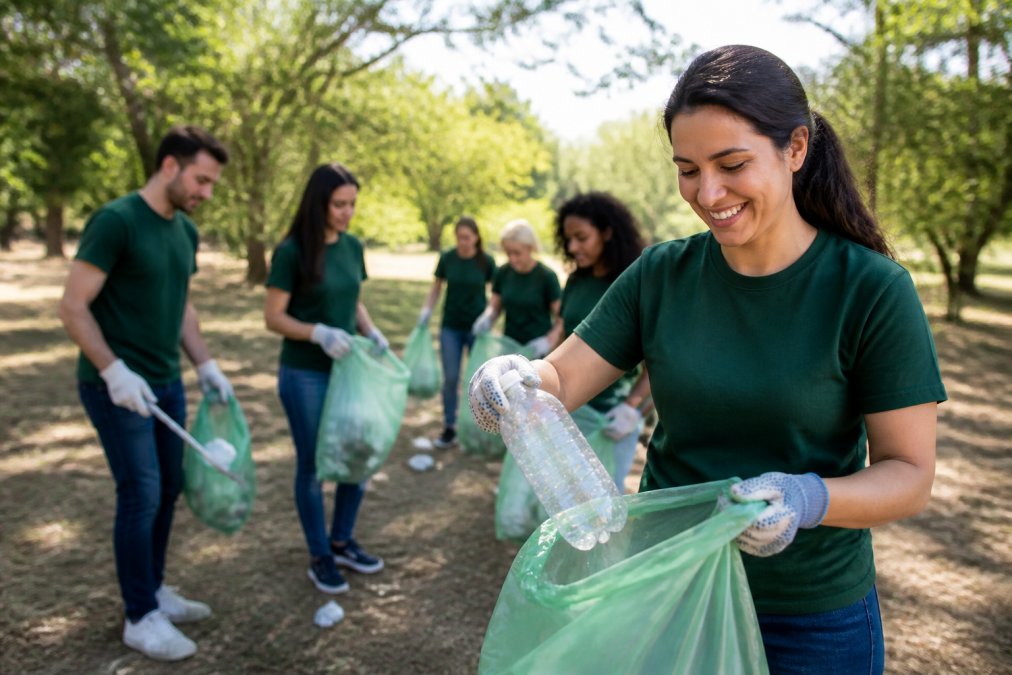
Custom apparel remains the most popular promotional product category for nonprofits because it's visible, wearable, and creates community, branded t-shirts worn by volunteers become walking advertisements for your cause.
Customized cotton totes offer a practical alternative to t-shirts. Made from 100% cotton with reinforced stress points, they feature a 10"W x 12"H imprint area and are durable enough to be reused for years, extending brand visibility. Self-fabric handles and a 3-inch bottom gusset provide structure for regular use.

Tote bags work well for fundraising events, donor appreciation, and conferences. Unlike t-shirts, totes fit everyone and are practical items donors use regularly, keeping your nonprofit visible.
When selecting apparel vendors, ask about minimum order quantities.
Bulk Custom Water Bottles for Events and Fundraising
The key metric is per-unit cost at your expected order size. Reliable vendors provide tiered pricing that rewards larger commitments.
Promotional Product Procurement Best Practices
Define your procurement goals: recognizing donors, building brand awareness, or thanking volunteers. Your goal determines which products make sense and quality level.
Establish a timeline. Vendors typically need 2-3 weeks for production after proof approval. Planning ahead saves money and prevents rush fees.
Create a detailed brief including logo files, brand guidelines, target audience, event date, budget, and quantity. Ask whether the vendor offers design services if your files aren't print-ready.
Navigating Minimum Order Quantities on a Nonprofit Budget
One of the biggest procurement challenges is the minimum order quantity (MOQ). Most vendors set MOQs between 50 and 500 units per design to justify setup costs.
Ask vendors about MOQ flexibility. Some offer tiered minimums that let you start small and scale up as your donor base grows.
Consolidate orders across multiple designs into a single production run. Ask whether your vendor applies volume pricing when bundling different products.
For tight budgets, consider vendors specializing in small-batch production. They charge higher per-unit costs but have lower minimums, ideal for testing products before larger orders.
Document MOQ agreements in writing. Confirm whether minimums apply per design, per category, or per order, and whether you can split shipments.
Vendor References and Quality Verification
Request references from other nonprofits. Ask whether products arrived on time, quality matched expectations, customer service was responsive, and there were no hidden fees.
Ask vendors for samples of the exact product you plan to order. Examine print quality, color accuracy, and material durability.
Compare total cost, not just per-unit price. Factor in shipping, setup fees, and design charges when calculating true cost.
Create a feedback loop with your vendor. Vendors who listen and adapt become long-term partners.
Giveaways, Awareness Items, and Low-Cost Options
Custom pens offer an economical option for awareness building. European-styled ballpoint pens come in multiple colors with a 1.375"W x 0.875"H imprint area and are affordable enough to distribute widely.

Pens work because people use them daily, creating repeated brand exposure that builds stronger recognition than expensive one-time items.
The strategy with low-cost items is volume. Distribute broadly at community events and as thank-you gifts to create cumulative awareness.
Key Takeaway
Low-cost giveaways work best when paired with a message. Hand a pen to a donor with a personalized thank-you note, and the pen becomes a memento of your appreciation, not just cheap merchandise.
Event-Specific Promotional Items and Signage
Sidewalk signs provide effective solutions for outdoor events. Heavy-duty plastic A-frames can be filled with sand or water for stability, with UV-printed graphics protecting against weather and fading.
150 Customized Cotton Shopping tote →
For frequent messaging changes, deluxe sidewalk signs offer quick-change capability with recessed graphic areas that slide into place, ideal for nonprofits running multiple events.
Round Table Throws provide professional presentation with full-color dye-sublimation printing on durable polyester tension fabric. Available for 60" round tables and 31.5" bar-height cocktail tables, they work for fundraising galas, information booths, and donor appreciation events.
[Prime] Fitted Table Throws cover 6-foot or 8-foot tables completely with graphics on all sides, making them practical for events planned in advance.
Signage and table branding create cohesive visual identity and reinforce professionalism.
Vendor Selection Criteria and ROI Tracking
Selecting the right vendor requires evaluating multiple criteria beyond price.
Vendor Evaluation Scorecard:
| Criteria | Weight | Vendor A | Vendor B | Vendor C |
|---|---|---|---|---|
| Price per unit | 20% | Score 1-10 | Score 1-10 | Score 1-10 |
| Minimum order quantity | 20% | Score 1-10 | Score 1-10 | Score 1-10 |
| Turnaround time | 20% | Score 1-10 | Score 1-10 | Score 1-10 |
| Print quality reputation | 15% | Score 1-10 | Score 1-10 | Score 1-10 |
| Ethical sourcing practices | 15% | Score 1-10 | Score 1-10 | Score 1-10 |
| Customer service | 10% | Score 1-10 | Score 1-10 | Score 1-10 |
Weight each criterion based on your priorities. For tight deadlines, turnaround time matters more. For mission-driven organizations, ethical sourcing deserves equal weight to price.
Verifying Ethical Sourcing and Labor Practices
Manufacturing Location: Ask where products are manufactured and verify transparency in sourcing.
Labor Certifications: Ask whether manufacturers hold third-party certifications like Fair Trade Certified, SA8000, or WRAP, which indicate independent audits of labor practices (SA8000® Standard).
Supply Chain Transparency: Ask whether the vendor can name manufacturing partners and explain vetting. Vagueness is a red flag.
Environmental Practices: Ask about sustainable materials, water-based inks, and waste minimization.
Audit Reports: Request audit reports or certifications. If vendors claim ethical practices but can't provide evidence, move on.
Measuring ROI and Campaign Effectiveness
Tracking ROI requires defining success: donor acquisition, event attendance, volunteer recruitment, brand awareness, or retention.
For donor recognition items, track repeat donations within 6 months. Survey donors about quality and perception. Ask volunteers whether branded apparel made them feel valued.
For event giveaways, measure attendance compared to previous years and track inquiries mentioning the event. Calculate cost per inquiry.
For awareness campaigns, use QR codes on merchandise to track engagement and measure whether merchandise drove conversions.
Track campaign name, product, total cost, metric, results, and cost per conversion.
Compare cost per conversion across products and campaigns to identify which drive the most efficient results.
Key Takeaway
Promotion products aren't just merchandise, they're a marketing channel. Treat them like any other marketing investment by setting goals, tracking results, and adjusting your strategy based on data.
Frequently Asked Questions
What are the most cost-effective promotional products for nonprofit fundraising?
Pens, tote bags, and drawstring bags offer strong ROI for nonprofits because they're affordable at scale and see frequent use. A set of 200 custom pens starts at $115, while tote bags at $498 for 150 units provide high visibility. Low-cost items work best when tied to a specific campaign or event, ensuring recipients use them repeatedly and share your message.
How do nonprofit organizations qualify for bulk pricing on promotional items?
Most promotional product vendors offer bulk pricing automatically when you order in larger quantities. Minimum order quantities typically start at 150-200 units. Nonprofits should ask vendors about volume discounts, nonprofit pricing tiers, and whether they offer free setup or shipping on bulk orders. Transparency about your nonprofit status and budget can sometimes unlock additional savings or in-kind donation options.
What factors should nonprofits consider when vetting promotional product vendors?
Evaluate vendors on quality consistency, turnaround time, artwork handling, and whether they work with nonprofits on budget constraints. Ask for samples or portfolio examples from similar organizations. Confirm they can handle your file formats and offer proofs before production. Check their return policy and guarantee. Strong vendors provide personalized support, clear communication, and transparent pricing without hidden fees.
How can custom promotional products increase donor engagement and retention?
Branded merchandise creates tangible touchpoints that remind donors of your mission every time they use the item. Custom apparel worn at events builds community identity. Thoughtful giveaways at fundraisers show appreciation and encourage repeat giving. Products with your logo and mission message reinforce your nonprofit's identity and make donors feel like active members of your cause, not just financial supporters.
What is the best way to track ROI on nonprofit promotional product campaigns?
Track ROI by measuring cost per item, distribution method, and follow-up engagement. Monitor donor retention rates after receiving promotional items, survey recipients about their perception of your organization, and track event attendance or fundraising totals before and after distributing branded merchandise. Document which item types generate the most positive feedback and repeat orders. This data informs future procurement decisions and justifies budget allocation.
- Choosing a selection results in a full page refresh.
