Your cart is empty
Looks like you haven't added anything to your cart yet









5 Budget-Friendly Employee Recognition Awards
Table of Contents
- Why Budget-Friendly Employee Recognition Awards Matter for Small Teams
- Quick Comparison of Recognition Award Options
- 1. Crystal and Glass Awards for Milestone Recognition
- 2. Personalized Promotional Items as Team Appreciation Gifts
- Best Practices for Employee Recognition Programs
- Employee Appreciation Award Ideas That Drive Results
- Employee Recognition Award Templates and Implementation
- Measuring ROI on Low-Cost Recognition Initiatives
- Frequently Asked Questions
Last Updated: September 19, 2026
Why Budget-Friendly Employee Recognition Awards Matter for Small Teams
Employee recognition isn't a luxury, it's a retention strategy. Small teams operate differently than large enterprises. Every person matters. When someone feels overlooked, they leave. When they feel valued, they stay and perform better.
Budget constraints shouldn't force you to choose between meaningful recognition and fiscal responsibility. The challenge is finding awards that feel personal, not cheap.
At 2mepromo.com, we offer tailored solutions for government agencies and small businesses, including high-quality promotional items, custom apparel, and professional signage designed to enhance brand identity and recognize excellence. The key isn't spending more, it's spending smarter. Below, we'll show you exactly how to implement budget-friendly employee recognition awards that actually drive retention and engagement.
Key Takeaway
The most effective recognition programs combine low-cost physical awards with consistent, personalized acknowledgment. Small teams see measurable improvements in morale and retention when recognition happens frequently and feels genuine.
Quick Comparison of Recognition Award Options
| Award Type | Starting Price | Best For | Personalization |
|---|---|---|---|
| Crystal/Glass Awards | $90-$199 | Milestone recognition, tenure awards | Engraved names, dates, achievements |
| Promotional Items | $29-$675 | Team appreciation, peer recognition | Full-color logo, custom messaging |
| Combination Approach | $120-$250 | Comprehensive recognition culture | Multiple touchpoints, varied recipients |
The most effective small teams use a mix. A crystal award for major milestones. Promotional items for frequent, peer-to-peer recognition. Together, they create a culture where excellence gets noticed.

1. Crystal and Glass Awards for Milestone Recognition
Crystal and glass awards carry weight. They sit on desks and become conversation starters. For milestone recognition, anniversaries, promotions, and major project completions, they signal that the achievement matters.
The 9 3/4" Rectangle Sierra Glass with Walnut Base at $90 delivers sophisticated recognition without premium pricing. The walnut base adds warmth. The glass and the walnut base can be engraved, giving you options for personalization. It's substantial enough to feel like a real honor, compact enough to fit any office.

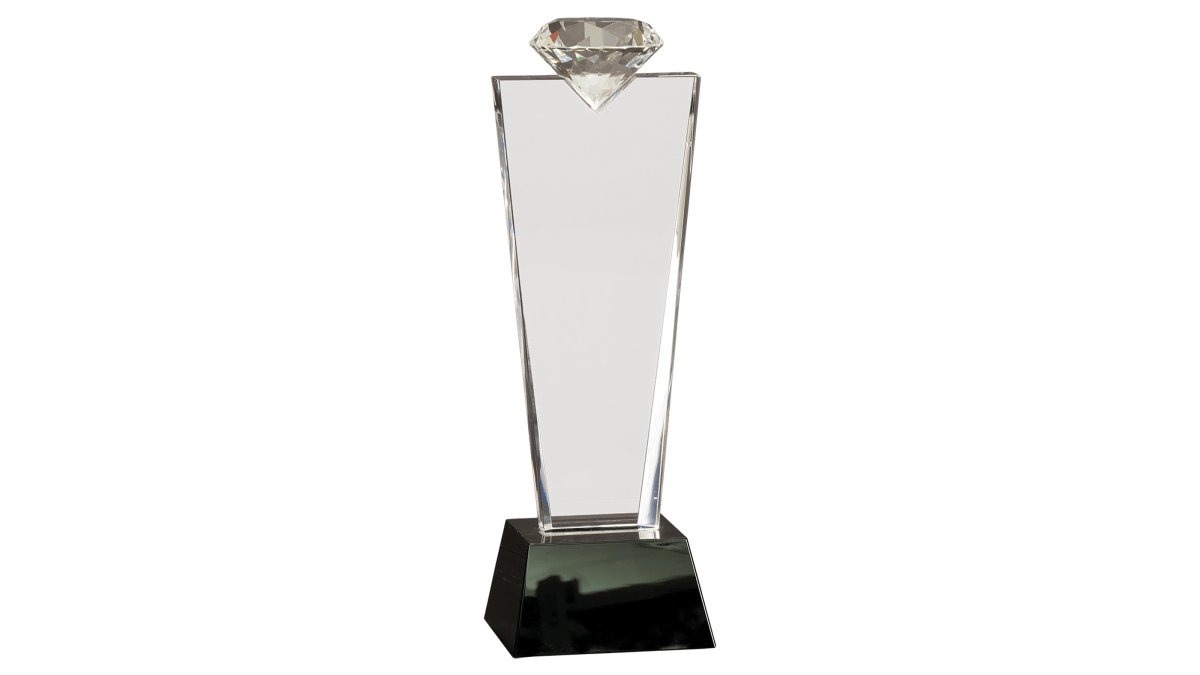
For larger milestones, five-year anniversaries, significant promotions, the 11" Crystal Diamond Top Award on Black Pedestal Base at $175 makes a statement. The black pedestal base looks professional. The diamond-cut top catches light. It's the kind of piece employees keep for decades.

Pro Tip
Pair the physical award with a brief public acknowledgment, even a team meeting mention or email announcement. The award becomes a tangible reminder of the recognition, not just a desk decoration.
Crystal awards cost less than many expect, yet feel premium. They're durable and personal without requiring extensive customization.
2. Personalized Promotional Items as Team Appreciation Gifts
Promotional items build team identity and belonging. When everyone has the same branded item, it builds cohesion.
The 150 Full Color Logo Drawstring Bags at $675 work well for larger recognition events or company anniversaries. They're practical, people actually use them. They're branded, your company stays visible. They signal that the team is valued enough to invest in.
For smaller teams, the Translucent Chip Clip with Magnet at $338 serves a different purpose. It's a desk item. It's functional. It's memorable. When someone uses it daily, they're reminded of the organization and the recognition moment.
Choose items your team will actually use. A promotional item gathering dust undermines the recognition message; one used daily reinforces it.
Watch Out
Avoid generic items without clear utility. A branded pen that runs out of ink in two weeks doesn't signal appreciation, it signals you grabbed something off a shelf. Choose items that last and that people want to keep visible.
Best Practices for Employee Recognition Programs
Recognition frequency matters more than award cost. Teams receiving monthly recognition outperform those recognized annually. But frequency alone fails without structure. Small teams often struggle with three problems: recognition defaults to the same people, managers forget to recognize between cycles, and recognition feels disconnected from business outcomes.
Build a recognition calendar to prevent gaps.
Create a simple 12-month recognition schedule. Assign specific recognition moments to specific months:
- January: Work anniversaries (1-year, 5-year milestones)
- March: Q1 project completions or innovation contributions
- June: Mid-year peer recognition cycle (team members nominate each other)
- September: New hire onboarding completions (recognize people who mentored new team members)
- November: Company values recognition (spotlight one person per week who exemplified a core value)
- December: Year-end team celebration and annual awards
This calendar forces recognition on schedule and ensures different people get recognized at different times.
Implement a peer nomination system without software.
You don't need HR software to run peer recognition. Use a shared Google Form or a simple email template. Once monthly, send a message to the team:
"Who did you see go above and beyond this month? Tell us their name, what they did, and why it mattered. Responses are anonymous."
Collect responses for one week. In the next team meeting, read the nominations aloud (without revealing who nominated them). The person with the most mentions gets a small recognition, maybe a $25 gift card, a reserved parking spot for a month, or a feature in your internal newsletter.
Peer recognition works because employees see contributions managers miss, it builds psychological safety, it distributes recognition power, and it costs almost nothing to run.
Connect recognition explicitly to business outcomes.
Generic praise ("Great job!") doesn't stick. Outcome-linked praise does. When you recognize someone, state the specific business impact:
11" Crystal Diamond Top Award on Black →
Weak: "Sarah did great work on the client proposal."
Strong: "Sarah's proposal included a cost analysis that identified $40,000 in annual savings, directly influencing the client's decision to sign a two-year contract."
The second version shows the organization values impact, not just effort.
Track who's been recognized to ensure fairness.
Use a simple spreadsheet with three columns: Employee Name | Recognition Type | Date. Review it quarterly to catch bias. For a team of 15, aim for everyone recognized at least once yearly. For a team of 50, aim for 60-70% recognized annually.
Pro Tip
If you notice the same person winning every month, that's a signal to look harder at other team members' contributions. Often, quieter contributors (people who don't self-promote) get overlooked. Managers need to actively seek out their wins.
Make recognition timely, not delayed.
Recognition loses impact if delayed weeks. Recognize major wins within days. A quick email or standup mention costs nothing and lands harder than a delayed award.
Differentiate recognition by achievement level.
Not all wins are equal. Create a simple tiering system:
- Peer recognition (monthly): Peer nominations, small gift card ($10-$25), public mention
- Project milestone (quarterly): Completion of a significant project, promotional item or small award, team announcement
- Annual milestone (yearly): Work anniversary, promotion, major achievement, crystal award, formal presentation
This prevents award inflation. A crystal award means something because it's rare. Peer recognition happens frequently because it's lightweight. Together, they create a recognition culture that feels both frequent and meaningful.
Employee Appreciation Award Ideas That Drive Results
Recognition must fit your team's work model. A catered lunch works for in-office teams but fails for remote ones.
For fully in-office or primarily in-office teams:
For fully remote or distributed teams:
For hybrid teams (the most complex case):
Recognition ideas that work across all work models:
Watch Out
Avoid recognition that only works for one work model. "We're taking the team to lunch" excludes remote people. "We're giving everyone an extra work-from-home day" doesn't reward someone already remote. Test every recognition idea against your actual team composition. If it doesn't work for everyone, modify it or choose something else.
The most effective recognition programs mix these approaches. Milestone celebrations for major wins. Peer recognition for ongoing contributions. Flexibility and development opportunities for high performers. And critically, recognition that works for your actual team structure, not a generic template. A remote team doesn't need a catered lunch. A fully in-office team doesn't need a shipped gift. Match the recognition to the work model, and it lands harder.
Employee Recognition Award Templates and Implementation
Start with a simple framework:
Step 1: Define what you're recognizing. Decide which achievements warrant awards, major milestones, project completions, or behavioral values.
Pro Tip
Use a simple spreadsheet to track who's been recognized and when. This prevents the same people from getting all the awards and ensures recognition spreads fairly across the team.
Measuring ROI on Low-Cost Recognition Initiatives
Track these simpler indicators: Retention rates (compare turnover before and after), engagement survey responses ("Do you feel valued?"), peer nominations (count monthly), manager feedback (improved morale or performance), and promotion velocity (internal promotions and career development).
Frequently Asked Questions
What are some fun employee recognition awards that won't break the budget?
Budget-friendly employee recognition awards include crystal and glass trophies ($90-$199), personalized promotional items like drawstring bags ($675 for bulk orders), and custom branded merchandise. The key is pairing the physical award with genuine acknowledgment, a handwritten note or public shout-out during team meetings amplifies the impact without added cost. Small teams benefit most from awards that feel personalized and tied to specific achievements rather than generic participation trophies.
How do you recognize employees on a tight budget while maintaining workplace culture?
Effective low-cost recognition combines tangible awards with frequent, meaningful acknowledgment. Implement peer-to-peer recognition programs where team members nominate each other, celebrate milestones in team meetings, and send personalized notes. Pair these practices with affordable awards, a $90 glass rectangle award or a custom promotional item, to create moments that feel special. Consistency and sincerity matter more than cost; employees value being seen and appreciated over expensive gifts.
What are the best practices for employee recognition programs in small teams?
Best practices for employee recognition programs include establishing clear criteria for awards, recognizing both individual and team achievements, and celebrating milestones publicly. Set a regular schedule for recognition (monthly or quarterly), tie awards to company values, and ensure fairness by rotating who receives recognition. For small teams, personal touches, like engraving names on awards or including handwritten messages, create stronger emotional impact than generic recognition. Remote-first teams benefit from virtual celebration moments combined with physical awards shipped to recipients.
How often should small teams give employee recognition awards?
Small teams should recognize employees regularly, ideally monthly or quarterly, to maintain engagement and reinforce company values. Frequent recognition prevents burnout and keeps morale high. The frequency depends on your team size and budget; with 5-15 people, monthly recognition ensures everyone feels valued over time. Balance formal awards with informal acknowledgment: public shout-outs during meetings, peer recognition programs, and personal notes cost nothing but matter significantly to employee retention and workplace culture.
- Choosing a selection results in a full page refresh.
