Your cart is empty
Looks like you haven't added anything to your cart yet







MFGMerch Alternatives for Custom Apparel
Table of Contents
- What to Look for in a Custom Apparel Provider
- Direct-to-Garment vs. Screen Printing: Which Fits Your Needs
- Custom Logo Embroidery Services for Professional Uniforms
- Promotional Products for Government Agencies and Small Businesses
- High-Quality Custom Branded Uniforms and Team Apparel
- Sustainability and Eco-Friendly Fabric Options
- E-Commerce Integration and Fulfillment Services
- Frequently Asked Questions
Last Updated: September 23, 2026
What to Look for in a Custom Apparel Provider
Choosing the right custom apparel alternatives means understanding what separates a vendor that delivers quality from one that disappoints. The difference often comes down to three critical factors: how they handle print quality, whether they can work with imperfect design files, and whether they can actually meet your deadline without cutting corners.
At 2mepromo.com, we've worked with government agencies and small businesses long enough to know what matters. Print durability determines whether your branded merchandise looks professional after three months or fades into a blurry mess. File preparation support separates vendors who make excuses from those who solve problems. And turnaround times that slip turn events into disasters.
Print Quality and Durability Standards
The real test of print quality isn't how it looks on day one. It's how it looks after your team has worn the shirt through ten wash cycles, or after your branded merchandise has sat in a warehouse for six months under fluorescent lights.
Our DTF Gildan 2000 Soft Style Shirts use 6-ounce, 100% US cotton with prepared-for-dying fabric that holds color consistently. The recycled tear-away labels add durability without visible branding that distracts from your custom design.

Design Support and File Preparation
Most teams have design files that are a mess. Files from old designers. PDFs that can't be edited. Images that are 72 DPI instead of 300. Logos that are too small or too large for the final print.
A vendor willing to work with what you have saves weeks of back-and-forth. You upload your image, and we handle sizing it correctly for a 10-inch print area. We make it work.
This matters especially for government agencies and small businesses that don't have in-house design teams. The difference between a vendor who says "your file won't work" and one who says "we'll adjust this for you" is the difference between a project that moves forward and one that stalls.
Turnaround Times and Production Capacity
A vendor can promise fast turnaround, but if they're backed up, your order joins a queue behind fifty others. Production capacity determines whether they can actually deliver when they say they will.
For teams needing custom apparel, the speed advantage of direct-to-garment printing can matter.
Direct-to-Garment vs. Screen Printing: Which Fits Your Needs
The choice between DTG and screen printing shapes everything: cost per unit, production timeline, design complexity you can handle, and the final look of your branded merchandise. Understanding the trade-offs prevents costly mistakes.
Direct-to-Garment (DTG) Printing
Direct-to-garment printing applies full-color designs directly to fabric using specialized inkjet technology. The process works like a high-resolution printer: your design file is converted to a raster image, the garment is loaded onto a platen, and inkjet nozzles spray water-based or pigment-based ink directly onto the fabric surface. The ink penetrates the fibers, creating a design that won't crack or peel.
DTG excels at:
- Small to medium orders (1-500 units): No setup fees, no screen creation, no color separation costs. Your per-unit price stays consistent whether you order one shirt or one hundred.
- Complex, multi-color designs: Photorealistic images, gradients, and detailed artwork print without additional cost or complexity.
- Fast turnaround: Design approval to shipment in 5-10 business days is typical. There's no waiting for screens to be burned or ink to cure between color passes.
- Design flexibility: You can change artwork between orders without retooling.
The trade-off: DTG works best on 100% cotton or cotton-blend fabrics. Synthetic fabrics (polyester, nylon) require pre-treatment to accept the ink properly, which adds cost and complexity. For very large orders (1,000+ units of identical designs), the per-unit cost becomes higher than screen printing because you're not spreading setup costs across volume.
Screen Printing
Screen printing forces ink through a mesh screen onto fabric, one color at a time. Each color in your design requires a separate screen, separate setup, and a separate print pass. For a three-color design, the garment moves through three stations.
Screen printing excels at:
- Large orders of simple designs (500+ units): Setup costs ($50-$150 per color) spread across hundreds of garments, lowering per-unit cost significantly. A 1,000-unit order of a two-color logo often costs less per shirt than DTG.
- Durability on synthetic fabrics: Screen-printed ink bonds to polyester and performance fabrics in ways DTG cannot without pre-treatment.
- Opacity and coverage: Screen printing lays down thick ink that covers dark garments without fading, which is why it's standard for dark-colored apparel with light-colored designs.
The trade-off: Setup time (3-5 business days) and color separation requirements slow turnaround. Complex artwork with fine details, gradients, or more than four colors becomes expensive because each color needs its own screen. Minimum orders are typically 25-50 units to justify setup costs.
Decision Framework
Choose DTG if:
- You're ordering fewer than 500 units
- Your design has more than three colors or includes photorealistic elements
- You need turnaround in under two weeks
- You want to test a design before committing to large volume
Choose screen printing if:
- You're ordering 500+ identical units
- Your design is simple (one to three colors)
- You're printing on dark-colored or synthetic fabrics
- Per-unit cost is your primary concern
File Format Considerations
DTG requires raster files (JPG, PNG, TIFF) at 300 DPI minimum. Vector files (AI, EPS, SVG) must be converted to raster before printing. This matters because raster files contain pixel data that translates directly to the inkjet nozzles.
DTF Gildan 2000 Soft Style Shirts →
Screen printing works with vector files (AI, EPS, PDF) because the artwork is separated into individual color layers and burned onto screens. Vector files are scalable without quality loss, which is why screen printers prefer them. If you only have a raster logo, screen printers will trace it into vector format, which adds $25-$75 to setup costs.
If you're unsure which method fits your order, a vendor experienced in both can review your design file and recommend the approach that delivers the best quality at the lowest cost for your specific volume and timeline.
Custom Logo Embroidery Services for Professional Uniforms
Embroidery adds a level of professionalism that printed designs sometimes can't match. An embroidered logo on a polo or jacket signals quality and permanence in ways that other techniques don't.
Embroidered logos use thread to create raised, textured designs. The thread is stitched directly into the fabric using specialized embroidery machines. This creates a three-dimensional effect that catches light and stands out. Embroidery is durable, it won't fade, crack, or peel because it's literally stitched into the garment.
The tradeoff: embroidery takes longer than printing and costs more per unit, especially for designs with fine details. Complex artwork with thin lines doesn't embroider well. But for professional uniforms, team apparel, or branded merchandise that needs to look expensive and last for years, embroidery justifies the investment.
Promotional Products for Government Agencies and Small Businesses
Government agencies and small businesses have different needs than large corporations. You need vendors who understand procurement requirements, appreciate budget constraints, and deliver quality without the enterprise price tag.
Government agencies need vendors who can work within compliance frameworks. Procurement rules often require competitive bidding, documented quality standards, and reliable delivery timelines. A vendor experienced with government orders knows these requirements and structures their process to meet them.
Small businesses need flexibility and personalized service. You might need fifty custom shirts for a trade show next month, then two hundred for an employee recognition event three months later. You need a vendor who remembers your brand guidelines and sizing preferences without making you explain everything again.
Bulk Order Discounts and Wholesale Pricing
Volume pricing exists, but it's not always transparent. Some vendors publish tiered pricing. Others require quotes. The difference in per-unit cost between ordering fifty items and five hundred can be significant.
2mepromo.com prices custom apparel starting at $15.00 per unit for DTF Gildan 2000 Soft Style Shirts, and $14.99 for lQK 75 Performance polos. The per-unit cost remains consistent whether you order one shirt or one hundred.
You know what you're paying before you commit. No surprise setup fees. No hidden charges for design work or file preparation.
No-Minimum Orders and Sample Policies
No-minimum ordering means you can test our quality with a single shirt. You can order samples to check color accuracy, fabric feel, and print durability before committing to a larger order.
A vendor willing to ship one sample shirt for the cost of that shirt is confident in their quality.
High-Quality Custom Branded Uniforms and Team Apparel
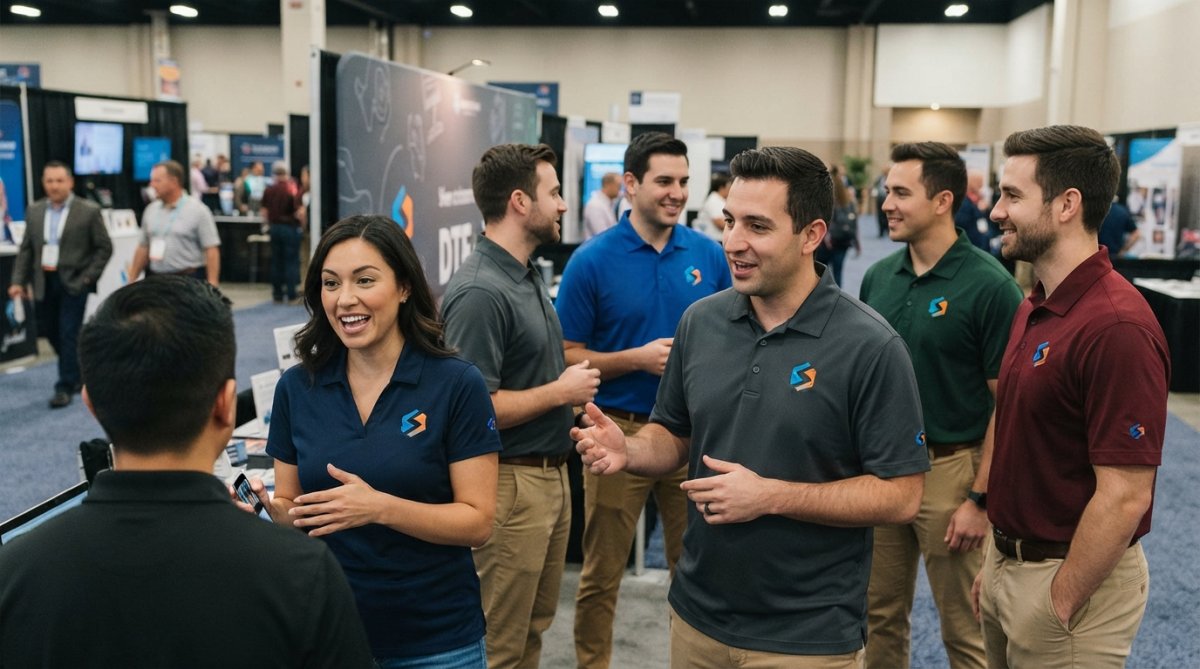
Branded uniforms do more than identify your team. They create visual consistency that strengthens brand recognition. When every person representing your organization wears matching apparel with your logo, your brand becomes visible at events, in offices, and in the field.
Custom branded uniforms also simplify procurement. Instead of managing dozens of vendors for different pieces, you work with one source for all team apparel. Sizing consistency, color matching, and brand guidelines stay aligned across every order.
The lQK 75 Performance Polo DTF uses spin-dyed 100% polyester pique, which means the color is built into the fabric itself using a process that uses 90% less water than traditional dyeing.
Sustainability and Eco-Friendly Fabric Options
Sustainability isn't just a marketing trend for government agencies and small businesses. It reflects organizational values and increasingly influences purchasing decisions.
E-Commerce Integration and Fulfillment Services
Managing custom apparel orders across multiple channels creates complexity. Orders come through your website, your email, your sales team's direct conversations. Tracking which orders have shipped, which are still in production, which are waiting for approval becomes a logistical nightmare.
Frequently Asked Questions
What factors should I consider when choosing a custom apparel provider?
Prioritize print quality and durability, design support capabilities, and realistic turnaround times. Verify that the provider can handle your file formats. Check whether they offer no-minimum orders for samples, and provide quality assurance standards.
How do I ensure quality control for custom logo embroidery services?
Request samples before placing a full order. Document your brand guidelines and sizing specifications in writing.
What are the benefits of working with a dedicated promotional products provider?
Dedicated providers offer personalized service for government agencies and small businesses. This ensures consistent brand identity across all promotional items.
What is the difference between screen printing and DTF (direct-to-garment) printing for custom apparel?
DTF printing excels at full-color, detailed graphics and requires no minimum order quantities, making it ideal for small batches and intricate artwork. Choose based on your design complexity, order volume, and timeline requirements.
- Choosing a selection results in a full page refresh.
