Your cart is empty
Looks like you haven't added anything to your cart yet







Custom Apparel Alternatives to Vistaprint
Table of Contents
- Why Businesses Switch From Vistaprint for Custom Apparel
- Custom Apparel Alternatives: What to Compare
- Custom Embroidery vs Screen Printing for Uniforms
- How to Choose a Promotional Products Vendor
- Direct-to-Film Custom Apparel Solutions
- Performance Apparel for Corporate Branding
- Conclusion
- Frequently Asked Questions
Last Updated: September 21, 2026
Why Businesses Switch From Vistaprint for Custom Apparel
When you're sourcing custom apparel for your organization, the vendor you choose shapes everything: production quality, design support, turnaround speed, and ultimately whether your branded items actually reinforce your professional image or undermine it. Many businesses discover that their initial choice doesn't align with their real needs once orders start rolling in.
The shift toward custom apparel alternatives often comes down to specific friction points. A government agency might need GSA compliance documentation that general marketplaces don't prioritize. A small business might find that bulk pricing structures don't work for their modest order volumes. A nonprofit might struggle with design files that arrived from a previous vendor and need expert help getting them production-ready. These aren't theoretical problems, they're the everyday obstacles that drive teams to evaluate alternatives.
2mepromo.com has spent years working with government agencies and small businesses on exactly these challenges. The difference between a vendor that merely accepts your order and one that actively solves your problems becomes obvious after the first shipment arrives. This guide walks through what to compare when evaluating custom apparel alternatives, which print methods actually deliver durability, and how to avoid the common mistakes that make switching vendors feel like starting from scratch.
Custom Apparel Alternatives: What to Compare
When you're evaluating a custom apparel alternative, resist the temptation to compare vendors on a single dimension. Price matters, but a cheaper shirt that fades after three washes costs more in the long run than one that holds color. Design support matters, but only if it actually saves your team time instead of creating more back-and-forth.
The comparison framework that works best breaks down into three core areas: how the garment gets printed, what the fabric actually is, and how much friction exists in the ordering process.
Print Method and Quality
The method used to print or apply your design directly determines how long the finished product lasts and how vibrant it looks.
Direct-to-Film (DTF) printing has become the dominant choice for custom apparel because it handles full-color designs, photographs, and complex graphics without the setup costs of traditional screen printing. The process transfers the design directly onto the fabric using a specialized printer and film, which means your logo stays vivid and doesn't crack or peel with regular washing. 2mepromo.com's DTF Gildan 2000 Soft Style Shirts start at $15.00 and come in multiple fabric blends, giving you flexibility across different use cases without sacrificing print quality.

The lQK 75 Performance Polo DTF at $14.99 offers an alternative that combines durability expectations with full-color printing capability.
Fabric and Durability
The garment itself matters as much as how it's decorated. A cheap blank shirt printed beautifully will still disappoint after a few washes if the fabric pills, shrinks unevenly, or loses its shape.
Cotton-based blends are the standard for custom apparel because they're comfortable, breathable, and accept dyes and prints reliably. The ratio of cotton to synthetic fiber changes how the garment behaves. Pure 100% cotton (like the DTF Gildan 2000 at $15.00) offers maximum breathability but can shrink slightly. Blends that introduce polyester (50/50 or 90/10 ratios) reduce shrinkage and add durability, making them better for frequent washing and high-traffic environments.
For performance apparel, think branded polos for outdoor events or staff uniforms in active roles, synthetic fabrics engineered specifically for moisture-wicking and color retention make a real difference. The lQK 75 Performance Polo uses 100% spin-dyed polyester pique, which means the color is built into the fiber during production rather than applied afterward. That process uses 90% less water and fewer chemicals than traditional dyeing, and it produces a fabric that never fades or loses color.
Weight matters too. A 6-ounce shirt feels lightweight and breathable, while heavier options (7 or 8 ounces) provide more structure and durability for items that get worn hard. Check the specifications, they tell you exactly what you're getting.
Custom Embroidery vs Screen Printing for Uniforms
When considering custom apparel for uniforms, the choice of decoration method comes down to volume, budget, and the message you want to send.
Pro Tip
For diverse orders, working with a vendor that can handle various custom apparel needs without forcing you to split your order across multiple suppliers can save time and ensure brand consistency.
How to Choose a Promotional Products Vendor
Picking a vendor for custom apparel goes beyond comparing prices on a spreadsheet. The vendor you choose becomes part of your supply chain, handling your brand identity and deadlines.
Design Support and File Preparation
Ask directly: if your artwork files are a mess, can the vendor fix them? Many businesses inherit design files from previous vendors or old campaigns that aren't optimized for production. A vendor that offers design review and file correction saves you weeks of back-and-forth. 2mepromo.com's team handles file preparation as part of the process, you upload what you have, and they size and prepare it for production, removing friction from the ordering workflow.
Compliance and Government Contracts
DTF Gildan 2000 Soft Style Shirts →
If you're a government agency, compliance isn't optional. GSA Schedule eligibility, proper documentation, and procurement alignment matter. Small vendors often skip this infrastructure because it's expensive to maintain. Confirm that your vendor understands government procurement before you commit to them. Ask for examples of work with other government agencies.
Turnaround Time and Reliability
Production lead times vary widely. Some vendors promise 3-5 days; others take 2-3 weeks. Understand what "turnaround" actually includes, does it start when your file is approved or when the order is placed? What happens if you need a rush? For events with hard deadlines, a vendor's actual track record matters more than their stated lead time.
Mockup and Approval Process
Before production starts, you should see a mockup showing exactly how your design will look on the garment. Some vendors provide digital mockups; others send physical samples. The approval process should be fast, ideally, one round of feedback rather than three. Slow approval cycles delay everything downstream.
Bulk Pricing and Minimum Orders
Understand the pricing structure. Do prices drop at specific order quantities (50, 100, 250)? What's the actual minimum order? Some vendors require 12-piece minimums; others start at 1. For small businesses and nonprofits, vendors with low minimums and transparent pricing matter more than vendors offering steep discounts at volumes you'll never reach.
| Evaluation Criteria | What to Ask | Why It Matters |
|---|---|---|
| Design Support | Can you fix artwork files? | Saves weeks of back-and-forth |
| Compliance | GSA eligible? Government experience? | Required for agency procurement |
| Turnaround | Actual lead time from approval to ship? | Protects event and campaign deadlines |
| Mockups | Digital or physical? How many rounds? | Prevents costly mistakes before production |
| Minimums | What's your actual minimum order? | Determines if vendor works for your volume |
| Pricing | How do bulk discounts work? | Clarifies total cost at your likely order size |
Direct-to-Film Custom Apparel Solutions
Direct-to-Film printing has become the standard for custom apparel because it solves problems that older methods couldn't. The technology transfers full-color designs directly onto fabric using a specialized printer, film, and heat press. What you see in the mockup is what you get on the shirt, no color shifting, no surprises.
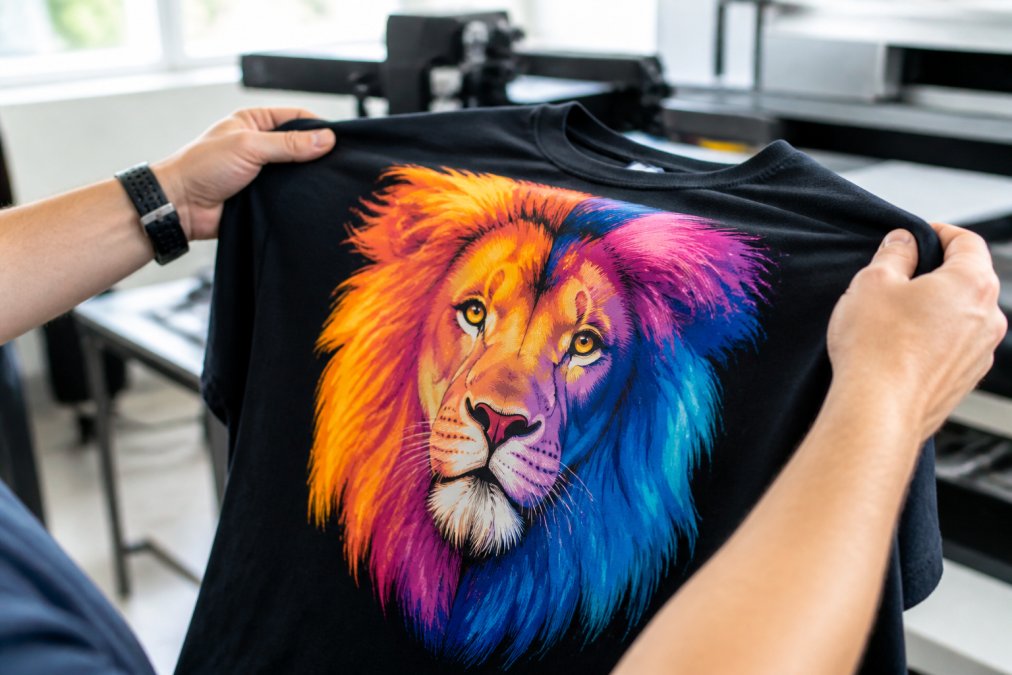
The practical advantage is flexibility. You can print one shirt with a unique design or 500 with the same design without changing setup or paying screen fees. That makes DTF ideal for small businesses that don't have predictable order volumes and government agencies that need customized items for different departments or events.
2mepromo.com's DTF offerings start at $15.00 per shirt and include options like the Customized DTF Shirt with your own logo, where you upload your design and the team handles the rest.

Key Takeaway
DTF printing eliminates the trade-off between customization and cost. You get full-color designs without screen setup fees, making it economical for small orders and complex artwork.
Performance Apparel for Corporate Branding
When your branded apparel needs to perform, whether that means moisture-wicking for outdoor events, durability for high-traffic environments, or simply looking professional in formal settings, performance-grade fabrics justify their cost.
Performance polos work well for:
- Government agency staff uniforms that need to look sharp across seasons
- Event staff apparel where appearance and functionality matter equally
- Corporate branding at trade shows and conferences
- Employee recognition programs where quality signals investment
Conclusion
Switching from your current vendor to a custom apparel alternative only makes sense if the new vendor solves a real problem: better design support, faster turnaround, compliance infrastructure, or simply more reliable quality. The best alternative isn't always the cheapest, it's the one that reduces friction in your workflow and delivers products that actually hold up.
Frequently Asked Questions
What should I look for when choosing a custom apparel vendor?
Evaluate vendors on print quality, fabric durability, design support, turnaround times, and whether they handle file preparation. Check if they offer mockups before production and have experience with your organization type, government agencies, nonprofits, or small businesses often have different compliance and customization needs. Request samples or references from similar clients to verify quality holds up after washing and wear.
How does screen printing quality differ between custom apparel providers?
Quality varies based on screen mesh count, ink type, curing temperature, and operator skill. Direct-to-Film (DTF) printing, like the Gildan 2000 Soft Style Shirts at $15.00 each, delivers full-color designs with minimal fading. Screen printing works best for single-color or limited-color designs. DTF prints can handle 10-inch images across the chest with consistent clarity, while screen printing excels at bold graphics on bulk orders. Ask vendors about their color retention testing and warranty.
What is the difference between embroidery and screen printing for corporate apparel?
Embroidery uses thread stitched into fabric, creating a dimensional, professional look that lasts through repeated washing, ideal for polos and performance wear in corporate settings. Screen printing applies ink directly to fabric, offering full-color designs and faster production for large orders. Embroidery costs more per unit but conveys premium quality; screen printing is cost-effective for bulk uniform orders. For government agencies and small businesses seeking durability, embroidery on performance polos like the Clique Spin Solution-dyed polo ($14.99) provides long-lasting brand visibility.
Are there benefits to using a specialized promotional products partner over a mass-market printer?
Specialized vendors understand government procurement standards (GSA compliance), bulk ordering logistics, and brand consistency requirements that mass-market printers often overlook. They provide personalized design support, handle file preparation from messy source files, and manage production timelines for events and campaigns. They also stock sustainable options like spin-dyed fabrics that use 90% less water, and offer compliance certifications like ANSI/ISEA 107 high-visibility standards for safety apparel.
- Choosing a selection results in a full page refresh.
