Your cart is empty
Looks like you haven't added anything to your cart yet







Eco-Friendly Promotional Items for Federal Agencies
Last Updated: October 22, 2026
Quick Summary
Eco-friendly promotional items are branded products made from recycled, recyclable, or renewable materials that agencies hand out to build visibility while cutting single-use waste. For federal buyers, the best options are durable and genuinely reusable, and every green claim must be backed by written documentation.
- Drinkware wins because people use it daily, so your logo gets seen every day.
- Cotton totes with reinforced stress points outlast thin bags that tear at the handle.
- Ask vendors for recycled content percentages in writing, not vague earth-friendly wording.
- Match each giveaway to the outreach goal, audience, setting, and what you want remembered.
- Confirm the purchasing route and vendor registration before comparing products or catalogs.
Table of Contents
- Why Eco-Friendly Promotional Items Fit Federal Outreach
- Reusable Drinkware: Water Bottles, Tumblers, and Coffee Cups
- Reusable Bags, Totes, and Everyday Carry
- Notebooks, Pens, and Desk Accessories in Recycled Content
- Bamboo, Cork, Wheat Straw, and Seed Paper Options
- How to Verify Green Product Claims Before You Buy
- Eco-Friendly Event Giveaways for Agency Open Houses and Fairs
- Promotional Product Vendor Evaluation for Government Contracts
- Frequently Asked Questions
Why Eco-Friendly Promotional Items Fit Federal Outreach
Eco-friendly promotional items are branded products made from recycled, recyclable, or renewable materials that agencies hand out to build visibility while cutting single-use waste.
That second part matters more than most guides admit. A giveaway that looks green on the catalog page but falls apart in a month creates the opposite of goodwill.
Federal buyers also work under rules private companies do not. Purchasing goes through established acquisition pathways, gifts face ethics limits, and green claims need substantiation.
Key Takeaway
The best eco-friendly promotional items for federal agencies are durable, genuinely reusable, and backed by a claim you can document. Pick products people keep, not products that get tossed.
Reusable Drinkware: Water Bottles, Tumblers, and Coffee Cups
Drinkware wins because people use it every day, which means your logo gets seen every day. It also replaces a steady stream of disposable cups and bottles. For federal offices, that is an easy story to tell.
Bottles That Survive Daily Commutes
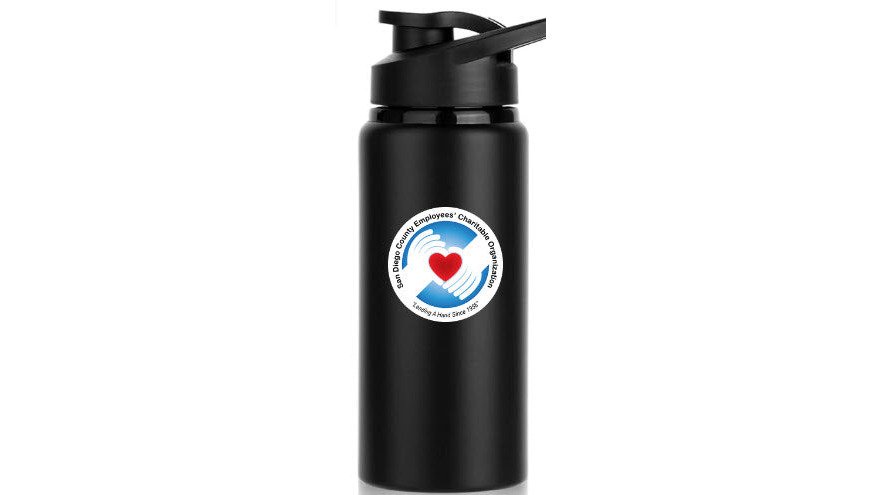
A good bottle fits a cup holder, a backpack pocket, and a desk. Our 17 ounce water bottle CECO hits that mark at $15.00, with a stainless steel lid and a nylon carry strap.


For a step up in feel, the stainless steel water bottle at $19.99 holds 20 ounces and has a built-in sealing ring. It is single wall, so it should not hold hot liquids.
Tumblers for Morning Coffee and Field Offices
The 20 oz vacuum insulated stainless steel tumbler at $15.99 keeps drinks at temperature and has a sip-thru lid. It suits morning commutes and site visits where a decent cup of coffee is hard to find. One caveat: it is hand wash only, not dishwasher or microwave safe. Say so on the card that ships with it.
Reusable Bags, Totes, and Everyday Carry
Tote bags are the workhorse of sustainable swag. They replace paper and plastic bags at events, and people genuinely reuse them for groceries and errands.
Our 150 Customized Cotton Shopping tote comes in at $498.00 for the run, made from 100% cotton sheeting with a 3-inch bottom gusset and reinforced stress points.

A common mistake is ordering thin bags to save money.
Notebooks, Pens, and Desk Accessories in Recycled Content
Desk items have the longest shelf life of any giveaway. A notebook and pen stay in use for months, and they sit in view during meetings.
Look for three things when sourcing them:
- Recycled paper stock with a stated post-consumer percentage
- Recycled or refillable pens rather than sealed disposable ones
- Binding that survives daily use, such as stitched or wire-bound spines
Ask your vendor what the recycled content actually is. "Eco-friendly notebook" is a marketing phrase, not a specification. A supplier who can name the material and the percentage is a supplier worth keeping.
Bamboo, Cork, Wheat Straw, and Seed Paper Options
Alternative materials give you a distinctive look, but each has trade-offs worth knowing before you order.
- Bamboo grows fast and looks sharp on desk accessories, though it needs a protective finish to last.
- Cork works well for coasters and notebook covers, and it is soft and quiet on a desk.
- Wheat straw suits tumblers and lunch containers, and it is often blended with plastic, so ask for the ratio.
- Seed paper makes a memorable event handout because recipients plant it, but it needs clear planting instructions printed on it.
None of these materials is automatically better than recycled plastic or cotton. What matters is whether the item gets used and whether the material claim holds up.
How to Verify Green Product Claims Before You Buy
Verifying green product claims means asking the vendor for written evidence of the material content and backing it with a recognized standard. A verbal assurance is not enough for a federal purchase file.
17 ounce water bottle CECO TAX DEDUCTIBLE →
Run this checklist before you approve any order:
- Request the material specification in writing, including recycled content percentage
- Ask which third-party certification applies, if any, and request the certificate
- Check that marketing language matches the documentation, with no vague "earth-friendly" wording
- Confirm the item is genuinely reusable, not a disposable product with a green label
- Get the claim in the contract so it is enforceable
The Federal Trade Commission's Green Guides set the baseline for environmental marketing claims in the United States. An item described as "recyclable" or "made with recycled content" should meet those standards, and your vendor should be able to explain how.
Watch Out
Do not repeat a supplier's green claim in your own outreach materials without seeing the documentation. If the claim cannot be substantiated, your agency carries the risk, not the vendor.
Eco-Friendly Event Giveaways for Agency Open Houses and Fairs
Event giveaways have a different job than desk gifts. They need to be easy to carry, hard to throw away, and cheap enough to hand out at volume. The mistake most agencies make is picking from a generic swag list instead of starting from the outreach goal, the audience, and the setting.
Map the Item to the Mission and the Moment
Before you choose a product, answer four questions:
- What is the outreach goal? A recruiting booth, a community open house, and a public-safety fair each call for different takeaways.
- Who is the audience? Job seekers will use a tote that day; families at a community event may prefer something to take home and plant or use in the kitchen.
- What is the setting and climate? An outdoor summer fair argues for drinkware; an indoor winter open house argues for desk items people carry back to the office.
- What does the agency want people to remember? A mission-driven item that reinforces your work beats a generic pen every time.
A Short Menu by Event Type
Use this as a starting point, then trim to what your audience will actually keep:
- Job fairs and recruiting events: reusable water bottles for registered attendees and cotton totes for carrying materials.
- Community open houses: seed paper cards as a lightweight takeaway, plus recycled-content pens at the sign-in table.
- Field days and outdoor events: insulated tumblers and reusable bottles that survive a day outside.
- Indoor briefings and stakeholder meetings: recycled-content notebooks and refillable pens that go back to the desk.
Match the volume to the crowd. Ordering a premium item for a mass handout wastes money; ordering a flimsy item for a high-value audience wastes the impression.
Plan for Accessibility and Inclusion
Not every attendee can use every item. Build in alternatives so the giveaway does not exclude people with varied abilities and needs:
- Offer a non-physical option, such as a digital resource or a sign-up for a follow-up mailing, for people who cannot carry items.
- Choose items with easy-to-open packaging and avoid giveaways that require fine motor control to use.
- Provide clear, large-print instructions on any item that needs explanation, such as seed paper.
- Keep at least one low-weight alternative on hand for attendees who cannot manage a full tote.
Pro Tip
Order one sample of each candidate item before the event and carry it for a week. If it annoys you, it will annoy your attendees, and it will end up in a trash can with your logo on it.
Promotional Product Vendor Evaluation for Government Contracts
Promotional product vendor evaluation for government contracts comes down to four questions: can they document their materials, can they meet your deadline, can they work within your procurement process, and can they handle the full order. Most guides stop there. Federal buyers cannot, because the purchasing pathway itself shapes which vendors are even eligible.
Start With the Purchasing Pathway, Not the Catalog
Before you compare products, confirm how the order will be placed. Agencies typically buy promotional items through one of a few routes:
- A micro-purchase below the simplified acquisition threshold, placed on a government purchase card, which keeps paperwork light but still requires a documented, reasonable price.
- A competitive small-purchase solicitation when the order exceeds the micro-purchase threshold, which means written quotes and a file that shows how you compared them.
- An existing contract vehicle or schedule, where the vendor already holds an award and you order against established terms instead of starting fresh.
Ask each vendor which of these routes they can support and whether they are registered in the federal award systems your contracting office requires. A vendor who has never processed a government purchase order will slow you down at the worst moment. The System for Award Management is where you confirm a vendor's active registration before you commit.
What to Put in the Evaluation File
Treat the vendor comparison as part of the purchase file, not a hallway conversation. For each candidate, capture:
- Written material documentation for any green claim, including recycled content percentage and any third-party certificate.
- A production timeline with a firm delivery date, not a range.
- Proof of past work for agencies or organizations with similar compliance needs.
- A clear process for artwork prep if your files are not print-ready.
- The purchasing route they support and their registration status.
That artwork point trips up a lot of buyers. Old logo files from a former designer often need cleanup before production, and a vendor who handles that in-house saves you a week. Put the cleanup scope in writing so it does not become a change order.
Match the Vendor to the Full Program
Most agencies need more than one product type at once, such as drinkware plus apparel plus signage. A vendor who can only supply one category forces you into multiple contracts and multiple deadlines, and each additional order is another file to document. 2mepromo.com offers government agencies and small businesses tailored, high-quality promotional items, custom apparel, and professional signage designed to enhance brand identity and recognize excellence.
Watch Out
Never accept a verbal delivery promise for an event. Get the ship date in the contract, build a buffer of at least a week before your event date, and confirm the vendor can meet the delivery terms your contracting office requires.
Frequently Asked Questions
What makes a promotional product eco-friendly?
A promotional item earns the label when its materials, production, and end-of-life path reduce environmental impact compared with a conventional alternative. Look for reusable designs, recycled content, recyclable materials, and durable construction that survives years of use. Bamboo, cork, canvas, stainless steel, and wheat straw are common sustainable materials. The strongest eco-friendly promotional items are the ones people keep and use daily, because long-term value and waste reduction matter more than a single green label.
How can federal agencies evaluate sustainability claims for promotional items?
Ask vendors for written documentation: material composition, recycled-content percentages, and any third-party certification. How to verify green product claims starts with refusing vague terms like 'earth-friendly' and requiring specifics you can compare across bids. Match the documentation to your agency's procurement checklist and keep it in the contract file. If a vendor cannot produce substantiation, treat the claim as marketing language rather than a purchase criterion.
What eco-friendly promotional items work well for agency events?
Eco-friendly event giveaways that hold up under repeated use perform best: 17 ounce water bottles, 20 oz vacuum insulated stainless steel tumblers, and 150 customized cotton shopping totes with a full-color logo. Pair them with recycled-content notebooks and pens for job fairs and open houses. Avoid single-use plastic novelties that end up in a landfill within a week. Choose items tied to the event's purpose so attendees keep them and your brand visibility lasts beyond the day.
What should agencies ask vendors about recycled or reusable products?
Promotional product vendor evaluation should cover four points: where the materials come from, how the item is printed, what the expected lifespan is, and how it can be recycled or reused at end of life. Ask for samples to check durability, confirm production lead times in writing, and request references from other government or nonprofit clients. A vendor that answers these questions with specifics is easier to defend in a procurement review than one that only sends a catalog.
- Choosing a selection results in a full page refresh.
