Your cart is empty
Looks like you haven't added anything to your cart yet









Professional Signage Solutions for Office Branding
Table of Contents
- Why Professional Signage Solutions Matter for Office Branding
- Types of Office Signage That Build Brand Identity
- Custom Signage for Small Business Branding
- Materials and Finishes That Ensure Durability
- ADA Compliant Office Signs and Accessibility Standards
- Digital Signage Solutions for Business Environments
- Signage ROI and Employee Productivity Impact
- Installation Services and Turnaround Time
- Frequently Asked Questions
Last Updated: September 1, 2026
Why Professional Signage Solutions Matter for Office Branding
Your office environment communicates before anyone speaks. Professional signage solutions shape how clients, employees, and visitors perceive your brand the moment they walk through the door. A cohesive visual identity across lobby signs, wayfinding systems, and conference room displays doesn't just look polished, it reinforces your company's values and professionalism at every touchpoint.
At 2mepromo.com, we work with government agencies and small businesses to provide tailored solutions that enhance brand identity. Strategic placement of branded signage, consistent use of materials, and clear visual hierarchy create an environment where employees feel pride and clients feel confidence. This is where professional signage solutions become a business asset, not just decoration.
The real opportunity most businesses miss is treating signage as an afterthought. When signage is planned alongside your broader brand strategy, not added last, it becomes part of your competitive advantage. Companies that invest in cohesive, durable professional signage solutions often report stronger brand recall and improved employee engagement. The cost of a professional approach can pay dividends through better client relationships, and a workspace that actually reflects your organization's standards.
Types of Office Signage That Build Brand Identity
Office signage falls into distinct categories, each serving a different strategic purpose. Understanding which types matter most for your space helps you allocate budget where it counts.
Lobby and Reception Branding
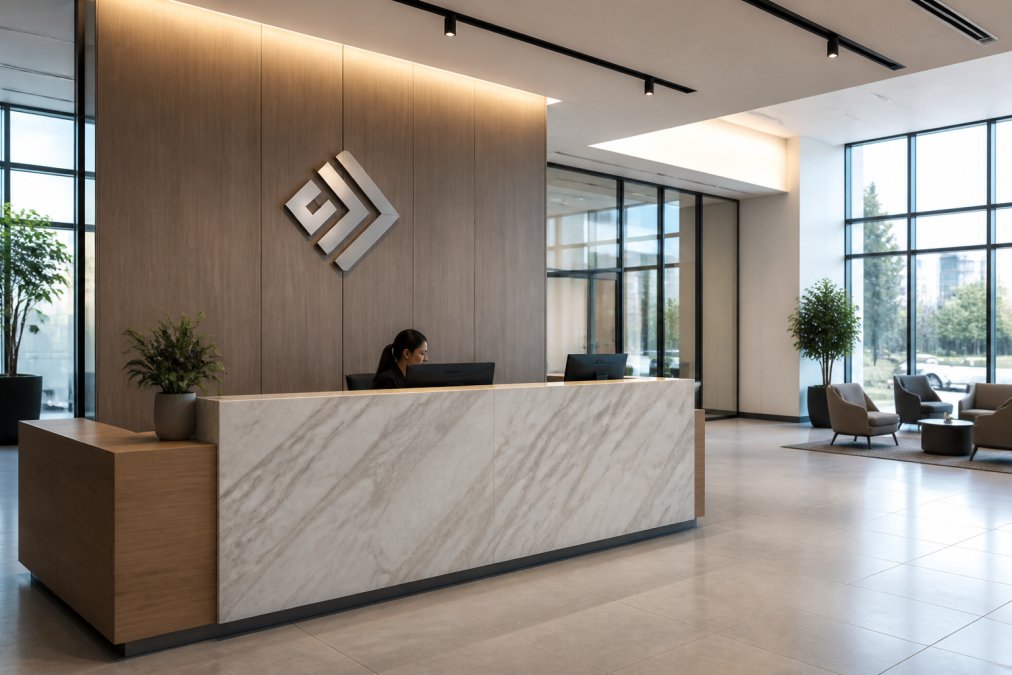
Your lobby is the first impression. Reception signage should command attention without overwhelming the space. This is where dimensional letters, backlit signs, or custom dye-sublimated aluminum displays work best. A well-designed reception area signals professionalism and sets the tone for everything that follows.
The 2mepromo.com team can help you create a statement piece. A large-scale logo installation or backlit display behind the reception desk creates instant visual impact. For smaller offices, a wall-mounted SEG (Silicone Edge Graphic) display like the Aspen Slim Wall Mounted Single-Sided Graphic Package starting at $96.92 delivers professional results without requiring extensive installation. The lightweight aluminum frame mounts directly to walls, and you can swap graphics seasonally to keep messaging fresh.

For government agencies and larger organizations, the 9.84 x 7.4ft. QSEG Quick Wall Display at $676.92 offers modular flexibility. These portable walls work equally well as semi-permanent lobby features or event backdrops, making them a versatile investment.

Wayfinding and Directional Signage
Wayfinding systems guide visitors through your space logically. Poor wayfinding creates frustration. Clear directional signage, whether floor decals, wall-mounted arrows, or standing banners, reduces confusion and improves the visitor experience. This is especially critical for larger offices, government buildings, or multi-floor facilities.
Directional signs should be consistent in style, color, and placement. Using the same materials and finishes as your lobby branding ties the visual system together. A 60" SilverStep Retractable Banner Stand at $300.03 serves double duty, permanent wayfinding in hallways or temporary directional signage for events. The durable canvas lead resists wear, and the velcro attachment system makes graphic updates simple.
Conference Room and Meeting Space Signs
Conference rooms need identification that matches your brand aesthetic. Simple room number placards miss an opportunity. Instead, use branded conference room signage that includes the room name, capacity, and booking information. This reinforces your brand identity in spaces where clients and employees spend focused time.
For a professional touch without major installation, wall-mounted SEG displays work well. They're thin, modern, and changeable. Alternatively, custom foam core signs, like the BIG HEAD SHAPED FOAMCORE at $50.00, work for novelty or accent signage, though they're better suited to event environments than permanent office installations.
Custom Signage for Small Business Branding
Small businesses often operate with tighter budgets but higher brand-building ambitions. The key is choosing signage solutions that deliver maximum impact without overextending resources.
Start by identifying your most visible spaces: the entrance, reception area, and any customer-facing walls. These three areas should anchor your signage strategy. A single high-quality statement piece, such as a backlit dimensional sign or a large-format wall graphic, establishes credibility immediately. Visitors form impressions in seconds; professional signage compresses years of brand building into that first moment.
One common mistake is spreading budget across too many small signs. A room full of mediocre signage reads as unprofessional. Instead, concentrate investment on fewer, higher-quality pieces. A single SEGO Modular Lightbox Display at $1,166.15 creates more impact than five cheap banner stands. The LED backlighting, dye-sublimated graphics, and modular frame system project sophistication and durability.

For businesses with multiple locations or seasonal campaigns, modular systems pay dividends. You invest once in the frame hardware and swap graphics as needed. This approach reduces long-term costs and keeps your brand messaging current without replacing entire installations.
Materials and Finishes That Ensure Durability
The material you choose determines how long your signage looks professional. Cheap materials fade, peel, and crack within months. Quality materials maintain appearance for years.
Acrylic and brushed metal are the workhorses of professional office signage. Acrylic offers clarity and can be backlit for dramatic effect. Brushed metal (aluminum) provides a modern, sophisticated look that pairs well with contemporary office design. Both resist fading and wear.
Dye-sublimated fabric (SEG graphics) delivers vibrant color and detail. The dyes bond directly with the material, preventing peeling or fading. This is the standard for high-end displays. The SEGO displays use premium dye-sublimated graphics with silicone edge inserts that maintain tension and appearance over time.
Aluminum and anodized finishes resist corrosion and maintain their appearance in high-traffic areas. The lightweight nature makes installation easier and reduces structural demands on walls. An anodized aluminum frame won't scratch or discolor like painted alternatives.
Foam core and vinyl are budget options but come with trade-offs. Foam core is lightweight and inexpensive but dents easily and doesn't withstand long-term office use well. Vinyl graphics fade faster than dye-sublimation, especially in bright lighting. These work for temporary signage or event displays, not permanent office installations.
For durability, prioritize dye-sublimated graphics on aluminum frames. This combination resists fading, handles high-traffic areas, and maintains professional appearance with minimal maintenance.
ADA Compliant Office Signs and Accessibility Standards
Federal accessibility standards require office signage to meet specific criteria. Non-compliance creates legal liability and excludes visitors with disabilities.
The Americans with Disabilities Act (ADA) Accessibility Guidelines specify requirements for signage in public and common-use areas (ada.gov). Key requirements include:
- Contrast: Text must have sufficient contrast against the background (minimum 3:1 for large text, 4.5:1 for small text) (ada.gov)
- Font size: Minimum 0.625 inches for text that must be readable from a distance
- Tactile elements: Room identification signs must include raised characters and Grade 2 Braille
- Character height: Raised characters must be between 0.625 and 2 inches (ada.gov)
- Placement: Signs must be mounted at accessible heights (typically 48-60 inches from floor)
Many businesses overlook ADA compliance because it seems complex. In reality, it's straightforward once you understand the standards. When working with a signage provider, specify ADA compliance upfront. Most professional fabricators build compliance into their process.
The good news: ADA-compliant signage doesn't sacrifice aesthetics. High-contrast color palettes (dark text on light background or vice versa) are often more visually striking anyway. Raised lettering adds dimension and sophistication. Braille placement is typically subtle enough to go unnoticed by sighted visitors.
Watch Out
Non-compliant signage exposes your organization to ADA lawsuits. Even well-intentioned signage that doesn't meet standards can trigger legal action. Budget for compliance from the start rather than retrofitting later.
Digital Signage Solutions for Business Environments
Digital displays are transforming how offices communicate. Unlike static signage, digital screens update instantly and can display different content throughout the day.
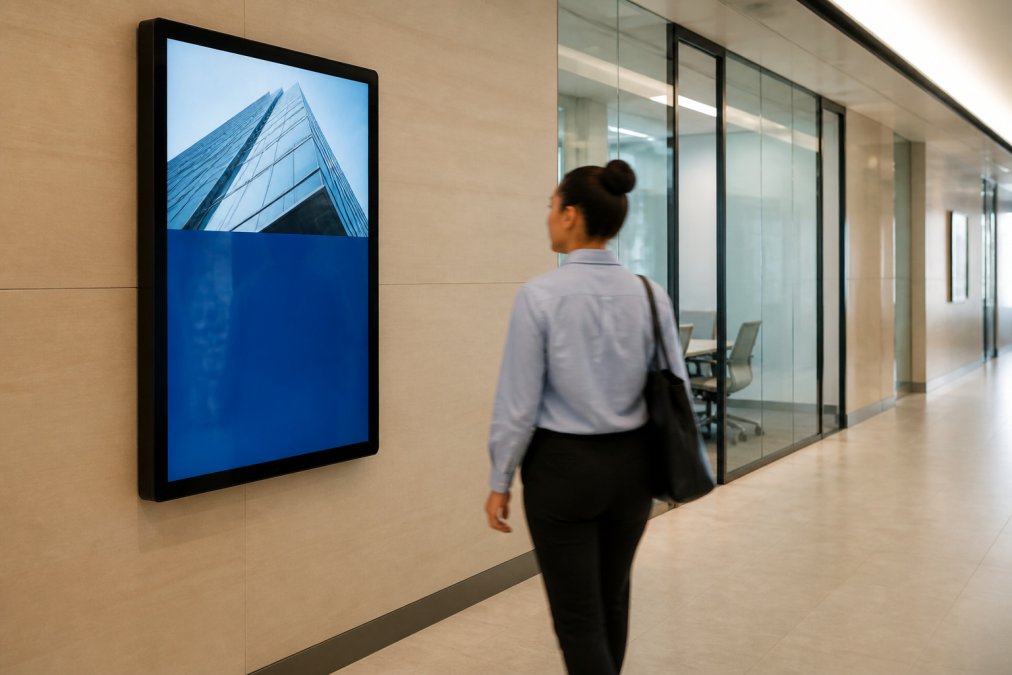
Digital signage works best for high-traffic areas where messaging needs to change frequently: lobbies, hallways, break rooms, and reception areas. A 10 foot pop up back lit display at $2,200.00 creates a focal point and commands attention. The LED backlighting ensures visibility even in bright office environments.
The advantage of digital over static signage is flexibility. Display employee recognition, company announcements, wayfinding information, or client-facing content, all from a single screen. During events, switch to event-specific messaging. During holidays, rotate seasonal content.
However, digital signage requires infrastructure: power, network connectivity, and content management software. Setup is more complex than static signage, and ongoing maintenance is essential. For organizations with dedicated IT resources and frequent messaging updates, digital signage can be a valuable investment. For smaller offices with static messaging needs, high-quality static signage often delivers better ROI.
The hybrid approach works well: use digital displays for dynamic, frequently-updated content (announcements, wayfinding) and static signage for permanent brand elements (logo, company name, core values). This balances flexibility with durability and cost-effectiveness.
Pro Tip
Digital displays in offices should be positioned at eye level and in high-traffic areas. Hallways, lobbies, and conference room entrances are ideal. Avoid placing displays where they compete with conversation or create distractions in focus areas like individual workspaces.
Signage ROI and Employee Productivity Impact
Here's what most businesses miss about office signage: it's not purely aesthetic. Strategic signage drives measurable business outcomes.
Employee pride and retention: Employees working in well-branded, professionally-designed spaces often report higher job satisfaction. This can contribute to lower turnover and stronger team morale.
Client perception and trust: First impressions shape business relationships. Professional signage communicates stability, attention to detail, and quality standards. Clients walking into a well-branded office are more likely to trust your organization and recommend you to others. This is especially critical for professional services, government agencies, and businesses competing on reputation.
Wayfinding efficiency: Poor wayfinding wastes time. Visitors get lost, employees spend time giving directions, and the experience feels disorganized. Clear directional signage reduces friction and improves operational efficiency. For large offices or government buildings, this compounds quickly.
Brand consistency: Consistent visual identity across signage reinforces brand recognition. Employees see the brand daily and internalize it. Clients encounter reinforced messaging. This consistency is how brands build equity over time.
The ROI calculation isn't always straightforward, you're not measuring direct revenue, but the impact is real. Organizations that treat signage as a strategic investment rather than an afterthought often report stronger brand perception, better employee engagement, and improved client relationships.
| Signage Element | Primary Benefit | Employee Impact | Client Impact |
|---|---|---|---|
| Lobby branding | First impression | Pride in workplace | Trust and credibility |
| Wayfinding | Operational efficiency | Reduced confusion | Professional experience |
| Conference room signs | Brand reinforcement | Consistent identity | Attention to detail |
| Digital displays | Dynamic messaging | Engagement and updates | Modern, responsive brand |
| ADA-compliant signs | Legal compliance | Inclusive environment | Accessibility commitment |
Installation Services and Turnaround Time
Professional installation separates quality signage projects from DIY disasters. Poor installation undermines even the best design.
When you work with 2mepromo.com, turnaround times are competitive. Most products ship within 2 business days. The Aspen Slim Wall Mounted Display, QSEG Quick Wall, and SilverStep Retractable Banner Stand all ship in 2 business days with free ground shipping.
For wall-mounted installations, you have two options: DIY or professional installation. DIY works if you're comfortable with basic tools and wall mounting. The Aspen Slim display includes wall mounts and an Allen wrench, installation is straightforward for simple configurations. Retractable banners are even simpler; assembly takes minutes.
For larger installations or complex configurations, professional installation ensures proper alignment, secure mounting, and clean aesthetics. This is where mistakes happen: uneven mounting, insufficient wall anchors, or poor cable management. Professional installers get it right the first time.
Common installation timelines:
- Simple wall-mounted signage: 1-2 hours
- Retractable banner setup: 15-30 minutes
- Large modular displays: 2-4 hours (depending on complexity)
- Digital signage with network integration: 4-8 hours (plus IT setup)
One thing nobody tells you about signage installation: the prep work matters more than the installation itself. Wall preparation (patching, priming, leveling) takes longer than mounting the sign. Budget time for this phase, especially in older buildings with uneven walls.
Key Takeaway
The best signage in the world looks mediocre if installation is sloppy. Whether you DIY or hire professionals, invest in proper wall prep and alignment. This is where the difference between "looks okay" and "looks professional" actually lives.
Professional signage solutions transform how your organization presents itself to the world. From lobby branding that commands first impressions to wayfinding systems that improve efficiency, every element contributes to a cohesive visual identity. The challenge isn't finding signage options, it's choosing solutions that align with your brand, meet accessibility standards, and deliver durability.
2mepromo.com specializes in custom signage solutions designed specifically for government agencies and small businesses. Whether you need modular lightbox displays like the SEGO, professional wall-mounted systems, or retractable banners for events, our expert team handles custom design, fabrication, and installation to ensure your brand makes a lasting impression. Get started with 2mepromo.com and elevate your professional presence with signage solutions that actually work.
Frequently Asked Questions
Q: How much do professional signage solutions typically cost?
A: Costs vary widely based on type and complexity. Wall-mounted displays like the Aspen Slim start at $96.92, while modular lightbox displays range from $1,166.15 to $2,355.03. Retractable banner stands are $300.03, and pop-up backlit displays run $2,200.00. Custom design and installation services add to the total. Request a quote to match your budget and specific signage needs.
Q: What materials work best for durable office signage?
A: Aluminum, brushed metal, and acrylic are industry standards for durability. Dye-sublimated fabric graphics resist fading and moisture. For wall displays, aluminum with shadow mounts ($94.53 and up) offers longevity and modern aesthetics. SEG (Silicone Edge Graphic) frames with aluminum extrusions provide lightweight, reusable systems. Choose materials based on your environment's humidity, lighting, and wear patterns.
Q: Are professional signage solutions ADA compliant?
A: ADA compliant office signs must meet specific requirements: proper contrast ratios, tactile elements where required, and appropriate signage placement. Standards include raised lettering, Braille, and color differentiation for wayfinding. Custom signage vendors can design compliant solutions during the fabrication process. Always specify ADA compliance when ordering to ensure your signage meets federal accessibility standards.
Q: How long does it take to install professional signage?
A: Most display systems ship in 2 business days with free ground shipping. Installation time depends on the solution: retractable banners and modular displays assemble in minutes, while wall-mounted systems may require professional installation. The QSEG Quick Wall and similar modular systems include travel bags for easy transport and setup at events or offices.
Q: What's the difference between custom signage for small business branding and generic office signs?
A: Custom signage reflects your brand identity through tailored design, logo placement, color matching, and messaging. Generic signs lack personalization and don't reinforce brand consistency. Custom solutions ensure your visual identity is cohesive across lobby, wayfinding, and meeting spaces. This builds professional credibility and helps employees and clients remember your brand.
This article was written using GrandRanker
- Choosing a selection results in a full page refresh.
