Your cart is empty
Looks like you haven't added anything to your cart yet









Why Choose Professional Branding Services in 2026
Table of Contents
- What Professional Branding Services Actually Deliver
- The Benefits of Professional Branding for Small Business Growth
- Why Brand Consistency in Marketing Decides Whether Branding Works
- Custom Signage for Small Business Branding: Where Strategy Becomes Visible
- The ROI of Professional Branding Services: What to Measure
- In-House vs Agency Branding: A Decision Framework
- How to Vet a Branding Partner and Mitigate Risk
- Conclusion
- Frequently Asked Questions
Last Updated: September 14, 2026
What Professional Branding Services Actually Deliver
Professional branding services are the strategic discipline of defining, building, and managing how an organization is perceived across every audience it touches. This guide from 2mepromo.com breaks down what those services include, what they cost, and how to decide whether to hire an agency or keep the work in-house.
Most buyers expect a logo. What they get, when the engagement is done properly, is a decision-making system: which colors are approved, which messages are on-brand, which vendors may print your name. That system is the deliverable; the logo is just its most visible artifact.
Beyond a Logo: Brand Identity, Strategy, and Positioning
A brand identity is the documented set of visual and verbal rules governing how an organization presents itself: logo usage, color values, typography, photography style, and tone of voice, all recorded in a standards document your vendors can follow.
Strategy sits one level above identity. Positioning answers a harder question: in a crowded market, what specific space do you occupy in your customer's mind? A branding engagement that skips positioning produces pretty assets with no commercial logic behind them.
The practical test: hand your brand standards to a new print vendor and see whether they can produce a compliant banner without asking a single question. If they can, the strategy work was done. If they can't, you paid for decoration.
The Benefits of Professional Branding for Small Business Growth
The benefits of professional branding for small business come down to three compounding effects: faster recognition, higher perceived credibility, and pricing power. None show up on a spreadsheet in month one, which is why so many small firms underinvest.
The Compounding Sequence
Recognition lowers the cost of every impression. A prospect who has seen your brand three times before a sales call processes your name faster than one seeing it for the first time. That speed advantage is small per touchpoint but repeats across every campaign, proposal, and event.
Credibility lowers the cost of the sales conversation. Buyers evaluate unfamiliar vendors on signals, and consistency is the loudest one. A firm whose signage, apparel, and proposals look like they came from one organization reads as established; materials that look like five different companies read as risky, and risk is expensive to overcome in a competitive bid.
Pricing power is the payoff. Once recognition and credibility are established, price stops being the only variable a buyer can evaluate. In saturated categories where service delivery is comparable, presentation often decides the contract, making brand consistency a procurement issue, not a marketing one.
Where the Effects Show Up First
Among small service firms, the earliest measurable change is rarely revenue, it is the number of inbound conversations that start with the prospect already knowing what the firm does. That shift usually appears within two quarters of consistent brand application, well before any change in close rate.
The second signal is shorter sales cycles. When a prospect arrives pre-familiar with your positioning, the discovery phase compresses because you are confirming a fit rather than explaining a category.
Client Trust, Credibility, and Competitive Advantage
Trust is built through repetition before it's built through conversation. When a prospect sees your brand at a trade show, then on a proposal, then on the shirt of the person staffing your booth, each exposure reinforces the last. Break that chain and every exposure starts from zero.
Competitive advantage follows from that chain staying intact. For a small firm, brand consistency is not a design preference, it is the mechanism that makes every other marketing dollar work harder.
Key Takeaway
Branding pays off through repetition across touchpoints. Every inconsistent material resets the trust clock for that prospect and forces the next impression to start from zero.
A Quick Self-Audit
Before hiring anyone, audit your own materials:
- Pull your last five customer-facing assets (proposal, banner, business card, social post, email signature).
- Lay them side by side and ask whether a stranger would guess they came from one organization.
- Count how many different blues, fonts, and logo lockups appear.
- Note how long it takes to find an approved version of each asset.
If the answer to the second question is no, or the count in the third is more than one, the gap is not a design problem, it is a governance problem, and it is the same gap professional branding services are built to close.
Why Brand Consistency in Marketing Decides Whether Branding Works
The importance of brand consistency in marketing is not aesthetic but financial. Rebranding costs money once; inconsistency taxes every campaign afterward, because each touchpoint re-establishes recognition the last one already paid for.
Most organizations don't fail at branding because the strategy was wrong. They fail because the strategy never reached the people producing materials: banners from one supplier, shirts from another, awards from a third, and three slightly different blues at the same event.
That's a governance problem, and it's fixable. Centralize approved assets, lock your color values to a reference standard, and give every vendor the same spec sheet.
- One master brand standards document, versioned and dated
- Locked color values, not verbal descriptions like "our blue"
- An approved vendor list with current templates
- A named internal owner for brand approvals
- A review step before any print or apparel order ships
U.S. Small Business Administration guidance on marketing and branding
Custom Signage for Small Business Branding: Where Strategy Becomes Visible
Custom signage for small business branding is where strategy stops being a document and becomes something a customer physically encounters. A retractable banner at a trade show, a canopy at a county fair, a polo on the person answering questions: these are the moments your positioning holds or collapses.
This is also where color accuracy stops being theoretical. Printers run CMYK inks, which do not reproduce Pantone reference colors exactly without intervention. If your brand blue matters, color matching is not optional. 2mepromo.com offers PMS Color Match at $38.46 per color, per material, adding one to two business days and strongly recommended for color-critical work.

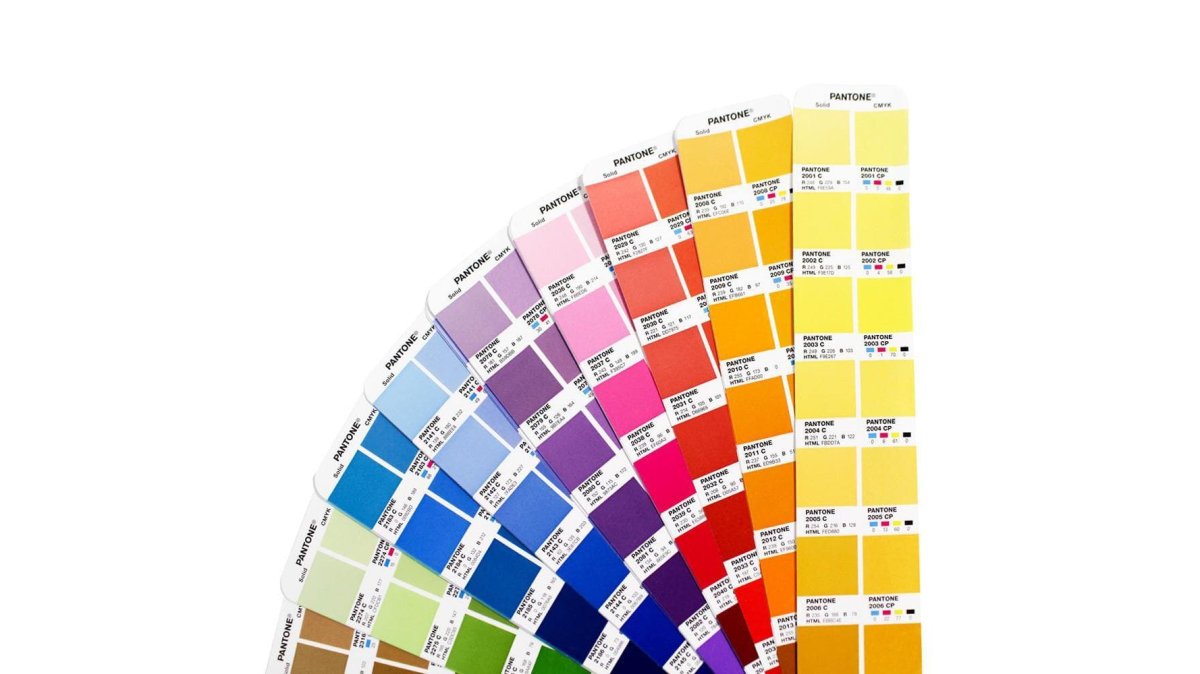
The same logic applies to scale. A 33.5-inch retractable banner stand starts at $95.38 and ships in two business days. A 10 x 10 ft EZ Tube Straight Tradeshow Display runs $1,072.71 with tool-free assembly and a wheeled travel bag. Both carry your identity; only one fits in a car trunk.
Watch Out
The most common mistake in branded signage is ordering the display before locking the artwork spec. Vendors build to a template size, and artwork produced for a different template will crop or letterbox.
The ROI of Professional Branding Services: What to Measure
Branding ROI is measurable, but not the way most teams try. You will not isolate a revenue line called "branding." You measure the proxies branding moves: recognition, recall, bid win rate, and cost per acquisition over time.
A practical framework is to score four inputs quarterly and watch the trend rather than the absolute number.
| What to Measure | How to Track It | What Improvement Looks Like |
|---|---|---|
| Brand recall | Unaided recall question in customer surveys | More prospects naming you unprompted |
| Bid win rate | Won deals divided by submitted proposals | Higher win rate at the same price point |
| Asset consistency | Vendor rejections and reprints per quarter | Fewer reprints, faster approvals |
| Cost per acquisition | Total spend divided by new customers | Lower CPA as recognition compounds |
Two of these are leading indicators and two are lagging. Asset consistency moves first, usually within a quarter. Bid win rate and CPA move last, often across two or three quarters. Judging a branding investment at 90 days is judging the wrong metric.
American Marketing Association resources on brand measurement
In-House vs Agency Branding: A Decision Framework
The in-house versus agency decision is not about capability. It is about whether brand work is a recurring need or a one-time project, and whether you can retain the specialist skills it requires. Here is a way to score your own situation.
Score These Five Inputs
Rate each input on a simple low/medium/high scale. The pattern of your answers, not any single one, points to the right structure.
| Input | Low | Medium | High |
|---|---|---|---|
| Frequency of brand work | One project per year | Quarterly campaigns | Continuous, weekly output |
| Internal design capacity | None on staff | One generalist | Dedicated designer or team |
| Strategic need | Execution only | Refresh of existing identity | New positioning or market entry |
| Production volume | Occasional print runs | Regular event and apparel orders | High-volume, multi-vendor |
| Budget structure | Project-based | Mixed | Ongoing retainer or salary line |
Reading the Pattern
Mostly low on frequency and capacity, high on strategic need: hire an agency. You need positioning done once, well, by people who do it repeatedly; bringing that in-house means hiring a senior strategist for a project that ends.
Mostly high on frequency and volume, medium on strategy: build in-house. Day-to-day asset production, campaign execution, and vendor coordination are recurring costs that a full-time role absorbs more cheaply than a series of agency engagements.
High on strategy and high on volume: the workable middle is a hybrid. Strategy from an outside partner, execution through an internal owner or a production vendor who already holds your brand standards. This is the structure most small and mid-sized service firms land on, because it separates the one-time thinking from the continuous doing.
The Hidden Costs on Each Side
In-house work carries coordination costs that rarely appear in the budget: the designer who also answers phones, the marketing manager who becomes de facto brand police, the version-control problem when three people edit one file. These are real hours, and they compound as the firm grows.
Agency work carries handoff costs: onboarding time, the learning curve on your category, and the risk that the strategy deck never reaches the people producing materials. That last risk is why the hybrid model exists.
Questions That Reveal the Right Fit
- Who owns brand approvals today, by name?
- Can your current team produce a compliant banner without asking you a question?
- Is the need a one-time reset or an ongoing function?
- What happens to the work when the project ends?
If you cannot answer the first question, no structure will hold. If you cannot answer the second, the gap is production, not strategy, and that points to a different kind of partner.
Pro Tip
Ask any branding partner for their artwork requirements before you sign. If they can't accept a layered PDF, Illustrator, or Photoshop file and tell you exactly which Pantone book to reference, you'll be the one reformatting files at midnight.
- In-house: best for ongoing campaign execution and day-to-day asset production
- Agency: best for positioning, identity systems, and one-time strategic resets
- Hybrid: best when you need strategy once and production continuously
How to Vet a Branding Partner and Mitigate Risk
Risk in branding engagements concentrates in three places: missed deadlines, color drift, and artwork that can't be produced. All three are preventable with the right questions before the contract.
Start with turnaround. Ask for the production timeline in writing, including how long proofs take and what happens if you request changes. A partner who ships in two business days on standard items and states their color-match service adds one to two days is telling you they know their own process.
Then ask about compliance if you're a public agency. Procurement rules, approved vendor lists, and documentation requirements vary by jurisdiction, and a partner who has worked with government contracts will already know what you need. Ask directly and ask for examples. U.S. General Services Administration guidance on government purchasing
Finally, ask for the portfolio. Not a gallery of logos, but photographs of installed work at events similar to yours. A vendor who has produced branded apparel, canopies, and displays for organizations like yours can show you the finished result, not a mockup.
Conclusion
The hardest part of branding isn't choosing a direction. It's keeping every banner, shirt, and display aligned to it long after the strategy deck is filed away.
2mepromo.com builds the physical side of that system for small businesses and government agencies: PMS color matching at $38.46 per color for exacting brand standards, retractable banner stands from $95.38 that ship in two business days, custom 10 x 10 tents at $649.00, and branded apparel like the K810 performance polo at $29.99. Every item carries your identity into a room you're not standing in.
![[Prime] Best Seller Retractable Banner Stand](https://cdn.shopify.com/s/files/1/0712/7492/2209/files/ONE-CHOICE-33.5-in-Good-Roll-Up-Banner-Stand-Graphic-Package_1.jpg?v=1785101936)
Get started with 2mepromo.com and put your brand standards into the materials your customers actually touch.
Frequently Asked Questions
What are the 5 C's of branding?
The 5 C's are clarity, consistency, commitment, communication, and customer focus. Clarity means your brand identity and value proposition are easy to understand. Consistency applies that identity across every touchpoint, from signage to apparel. Commitment reflects long-term investment rather than one-off projects. Communication covers how your brand messaging reaches your target audience. Customer focus keeps stakeholder perception and client trust at the center. Professional branding services help small businesses apply all five without the trial-and-error of doing it alone.
How does professional branding impact customer trust?
Consistent visuals and messaging signal reliability. When a client sees the same logo, colors, and tone on your website, your trade show display, and your staff apparel, they read it as an established operation rather than a side project. That perception lowers the risk they feel in hiring you. A branding partner enforces that consistency through brand guidelines and production standards, so every touchpoint reinforces professional credibility instead of undermining it.
What is the 3-7-27 rule of branding?
The rule suggests a prospect needs roughly 3 exposures to notice your brand, 7 to remember it, and 27 to feel ready to buy. It is a planning heuristic, not a guarantee, but it explains why one logo refresh rarely moves the needle. Professional branding services build repetition into your presence: repeating colors on signage, apparel, and event displays so each impression compounds. Budget for a steady drumbeat of touchpoints rather than a single campaign.
How much should a small business budget for professional branding services?
Budget depends on scope. A color-critical project like PMS color matching runs $38.46 per color per material, while a retractable banner stand starts at $95.38 and a 10 x 10 custom tent runs $649.00. Bundling signage, apparel, and event displays with one partner usually costs less than sourcing each item separately, because you avoid repeated setup, artwork, and shipping fees. Start with the touchpoints your target audience sees most, then expand as revenue allows.
- Choosing a selection results in a full page refresh.
