Your cart is empty
Looks like you haven't added anything to your cart yet







Why Promotional Items Fail for Marketing
Table of Contents
- Why Promotional Items Fail for Marketing
- Poor Product Quality and Durability Damage Brand Perception
- Target Audience Mismatch Reduces Campaign Effectiveness
- Best Practices for Promotional Product Selection
- How to Choose Promotional Items for Events
- Weak Brand Messaging and Design Failures
- Promotional Product ROI Calculation and Measurement
- Budget Constraints and Cost-Cutting Mistakes
- Frequently Asked Questions
Last Updated: September 30, 2026
Why Promotional Items Fail for Marketing
Promotional items are meant to build brand awareness and keep your organization top-of-mind. But many campaigns fall flat. The products arrive damaged. The design fades after a few weeks. The target audience doesn't actually want them. When promotional items fail for marketing, the cost isn't just wasted budget, it's a missed opportunity to strengthen brand identity and create lasting impressions at events.
Most failures are preventable, they stem from mistakes in product selection, design quality, and audience alignment. Below, we'll walk through the most common reasons campaigns underperform and how to fix them.
Poor Product Quality and Durability Damage Brand Perception
Low-quality products destroy brand perception faster than almost anything else.
A customer receives a branded pen with cheap plastic that cracks after two uses. They throw it away. Every time they see your organization's name, they remember that broken pen. That's the opposite of brand recall.
Quality failures, material degradation, structural failure, and poor printing, send a message about your brand. Customers assume that if you cut corners on a giveaway, you cut corners elsewhere. This damages trust and brand equity.
Watch Out
Ordering the cheapest option available often means receiving products that fall apart within weeks. The cost savings disappear when your brand reputation takes a hit and you need to reorder quality items.
Target Audience Mismatch Reduces Campaign Effectiveness
The wrong product for the wrong audience is a guaranteed loss. Audience mismatch happens when you skip research and pick items based on trends or budget rather than what your target demographic actually needs or wants.
Answer these questions: Who attends? What do they use daily? What do they value? What will they keep? A promotional item only works if your target demographic wants it. Match the product to the audience to create genuine brand touchpoints.
Pro Tip
Survey your audience before selecting items. A quick poll asking "Which of these would you actually use?" prevents expensive mistakes and ensures your selection resonates with the people who matter most.
Best Practices for Promotional Product Selection
Define your goal first. A conference giveaway needs different criteria than employee recognition awards or staff uniforms. Everything else flows from that decision.
Choose products with proven utility. Items people use regularly create more brand touchpoints. A pen someone uses daily beats a novelty item that sits in a drawer.

Prioritize durability over cost. A product that lasts three months creates three months of brand touchpoints. A product that falls apart in two weeks creates one moment of disappointment. The math favors quality.
Verify printing quality standards. Ask your vendor about their imprint process. A vendor who stands behind their work gives you confidence.
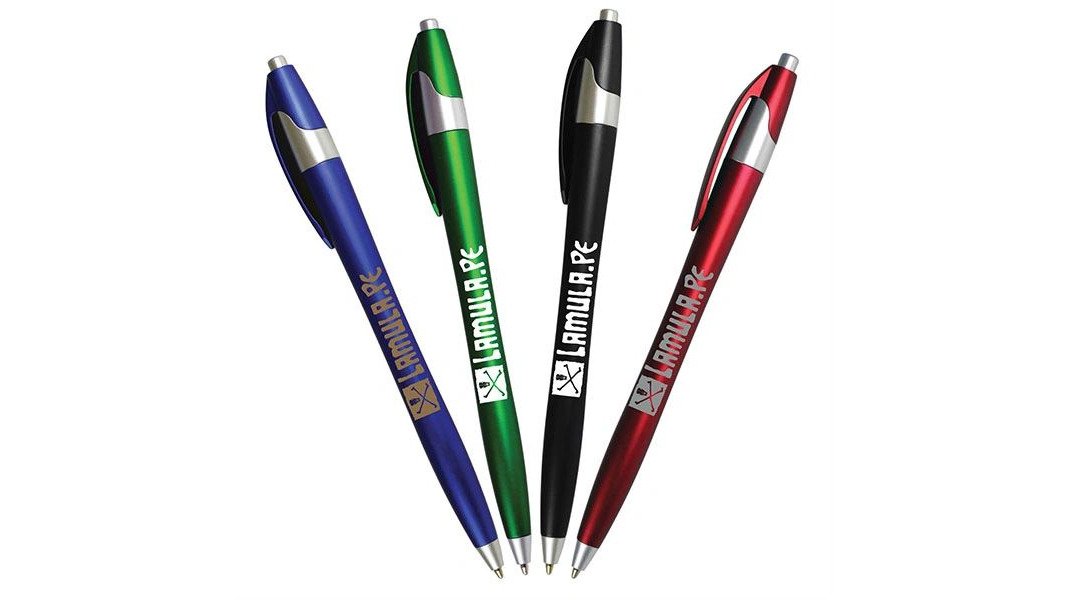
The right partner focuses on quality and fit rather than just moving inventory, matching your needs to products that deliver results.
How to Choose Promotional Items for Events
At a trade show or community event, your promotional items compete against hundreds of other giveaways. Yours needs to stand out, get taken home, and create a brand touchpoint.
Understand the psychology of perceived value. An item's perceived value isn't about cost, it's about whether the recipient believes it's worth keeping. High-value items share traits: utility (usable immediately), exclusivity (limited-edition or event-specific), surprise factor (memorable and discussed), relevance to context (solves a current problem), and quality signal (well-designed and durable).
Low-value items get discarded: generic mass-produced items, unclear purpose, visible low quality, and no personal connection to the recipient's job or interests.
Consider the event environment and logistics. Lightweight items work better at trade shows; outdoor items need weather resistance; high-traffic areas need grab-and-go items; sit-down events allow for explanation-heavy items.
Build in a digital bridge. A physical item without digital connection is a one-time touchpoint. Add QR codes, NFC tags, unique codes, hashtag campaigns, or augmented reality to create ongoing engagement and track interactions.
Match item type to audience and goal. Trade shows need utility-focused items (pens, chargers). Consumer events need novelty and surprise. Employee recognition needs premium items. Sponsorship activations need photo-worthy items.
Test item appeal before bulk ordering. Bring samples to a small event and observe: Do people take them? Keep them? Engage with digital components? Ask direct questions and watch for hesitation.
Weak Brand Messaging and Design Failures
Your promotional item is a miniature billboard for your brand. Common design failures: text too small to read, logo placement that gets covered, cluttered design, inconsistent branding, and no clear call to action. Your design should communicate your message in three seconds. Work with a designer who understands your brand identity before production.
Key Takeaway
Strong promotional product design balances brand visibility with simplicity. The best designs are instantly recognizable and communicate a single clear message without clutter.
Promotional Product ROI Calculation and Measurement
Many organizations skip ROI measurement entirely. They order items, distribute them, and never check whether they actually moved the needle. This is a critical gap, without measurement, you're flying blind on what works and what doesn't, and you repeat the same failures in the next campaign.
The problem runs deeper than just missing numbers. When promotional items fail silently, when they're thrown away, forgotten, or never create a brand touchpoint, you don't know why. Was it the product itself? The audience? The design? The distribution method? Without post-campaign data, you can't diagnose the failure or improve.
Define success metrics before distribution. Success looks different depending on your goal:
- Lead generation campaigns: Did attendees provide contact information in exchange for the item? Track how many people who received items later engaged with your follow-up email or call.
- Brand awareness campaigns: Did recipients remember your organization weeks later? Survey a sample of recipients 2-4 weeks after distribution and ask unprompted brand recall questions.
- Engagement campaigns: Did people actually use the item or interact with it? For items with digital components (QR codes, NFC tags), track scans and interactions.
- Conversion campaigns: Did the giveaway lead to sales, sign-ups, or other measurable business outcomes? Link item distribution to customer records.
Implement tracking at the point of distribution. This is where most campaigns fail to gather data:
- Attendee sign-in: Require a name and email when handing out items. This creates a direct link between the person and the promotional item they received.
- Unique identifiers: Use batch codes, QR codes, or sequential numbering on items so you can track which batches went to which events or audience segments.
- Digital bridges: Items with embedded QR codes or NFC tags create automatic tracking. When someone scans the code, you capture their interaction data, device type, location, time, whether they visited your website afterward.
- Survey codes: Include a unique code on the item that people enter to claim a discount or enter a contest. This ties the physical item directly to a digital action.
If you spent $3,000 on promotional items and distributed 750 of them at an event, your cost per item is $4. But that's not the metric that matters. What matters is: Of those 750 people, how many later purchased from you, signed up for your newsletter, or took a desired action?
Common measurement mistakes to avoid:
- Measuring only immediate distribution: Handing out 500 items feels like success until you realize only 12 people engaged with your follow-up.
- Ignoring negative perception shifts: A campaign that increases awareness but decreases trust is a net loss.
- Comparing to wrong benchmarks:
- Setting unrealistic conversion expectations: Promotional items are typically awareness or engagement tools, not direct-response mechanisms. Don't expect 20% conversion rates.
- Failing to segment results: Results differ by event type, audience segment, and item type. Measure each separately so you can identify which combinations work.
Budget Constraints and Cost-Cutting Mistakes
Budget pressure is real. But cutting corners on quality creates bigger problems than staying within budget.
Common cost-cutting mistakes:
- Choosing the cheapest vendor, Low prices often mean low quality, damaged shipments, or missed deadlines
- Reducing order quantity below what you need, Shortage creates stress and limits distribution
- Skipping sample approval, Saving time on samples means discovering quality issues after bulk production
- Using cheap printing methods, Pad printing and screen printing have different durability profiles; cheaper methods fade faster
- Ordering items nobody wants, The cheapest item is worthless if nobody keeps it
Frequently Asked Questions
How can businesses measure the ROI of promotional items?
For events, measure lead generation directly tied to the giveaway. This data helps refine your selection strategy.
What role does product quality play in promotional marketing success?
Product quality determines whether recipients keep and use your branded item or discard it immediately. Low-quality promotional items create negative brand associations, faded imprints, broken zippers, or cheap materials signal that your organization cuts corners. High-quality products become touchpoints that reinforce brand identity every time they're used. Recipients who keep quality items display them in offices or homes, extending your brand exposure. Poor durability destroys brand recall within weeks, making quality non-negotiable for any effective promotional campaign.
How do I choose the right promotional items for my target audience?
Start by identifying who receives the item and what they actually need. Government employees value professional, durable items like custom apparel or desk accessories. Trade show attendees appreciate practical tools they'll use daily. Small business clients respond to items that support their workflow. Avoid generic giveaways that don't align with recipient lifestyle or job function. The best promotional items solve a real problem or enhance daily work. Ask yourself: Would I keep this item if someone handed it to me? If the answer is no, your audience won't either.
Why do many promotional campaigns fail to generate measurable results?
Most campaigns lack clear objectives before launch. They distribute items without tracking who receives them, fail to connect the giveaway to a specific call-to-action, and never measure follow-up engagement. Success requires defining your goal upfront (lead generation, brand awareness, customer retention), selecting items that appeal to your specific demographic, and establishing metrics before distribution. Without measurement infrastructure, you cannot determine whether the campaign succeeded or failed. This disconnect between distribution and data collection is why promotional product campaigns fail to show ROI, not because the items are ineffective, but because the strategy was never clearly defined.
Promotional items can drive real results when they're selected thoughtfully, designed clearly, and matched to your audience. The failures happen when organizations skip the planning phase or prioritize cost over impact. Start with your goal, choose products your audience actually wants, invest in quality that lasts, and measure what works. Get started with 2mepromo.com and build promotional campaigns that create lasting brand impressions instead of wasted budget.
- Choosing a selection results in a full page refresh.
