Your cart is empty
Looks like you haven't added anything to your cart yet








7 Steps to Use Illuminated Signs for Evening Foot Traffic
Last Updated: November 4, 2026
Quick Summary
Illuminated signs help small businesses attract evening shoppers by making a storefront visible and signaling that it is open after dark. Success depends on checking local zoning and brightness rules, choosing the right sign type, placing the sign where it is seen, and keeping it lit on a set schedule.
- Check zoning, permit, and brightness limits with your planning office before you order.
- Confirm footcandle and nits limits in writing, since a sign can meet size rules and still fail brightness rules.
- Mount the sign where approaching customers see it, and check the view from the street at night.
- Set the sign to turn on at dusk and off at closing using a timer or photocell.
- Get written quotes from at least three vendors and budget for electrical work and electricity.
Table of Contents
- Why Illuminated Signs Pull In Evening Shoppers
- Step 1: Check Zoning and Permit Requirements Before You Buy
- Step 2: Choose the Right Sign Type for Your Storefront
- Step 3: Estimate the Cost of LED Business Signs
- Step 4: Place and Aim Your Sign for Maximum Visibility
- Step 5: Use LED Business Sign Benefits to Support Your Case
- Step 6: Set a Lighting Schedule and Maintenance Routine
- Your Next Step: Plan Your Illuminated Sign Order
- Frequently Asked Questions
Illuminated signs can turn a dark storefront into a reason to walk in after sunset. For most small businesses, a well-placed, well-lit sign is one of the simplest ways to pull in evening shoppers who would otherwise walk right past.
Here is what most sign buyers miss: a sign that is lit but not seen is wasted money. Visibility depends on placement, brightness, and timing as much as on the design itself. The steps below cover each of those factors, with pros and cons for the main options.
Why Illuminated Signs Pull In Evening Shoppers
Illuminated signs make your business easy to find after dark. Daytime shoppers can see your window displays and building. At night, a glowing sign is often the only thing that tells a passerby what is inside.
A lit sign also signals that you are open. That single cue can turn a casual glance into a visit, especially for restaurants, cafes, and retail shops that rely on walk-in traffic.
Step 1: Check Zoning and Permit Requirements Before You Buy
Local zoning codes often regulate signs, and illuminated signs can face extra review because they affect neighbors after dark. Check your local rules before you order anything.
Start with your local planning or zoning office. Ask whether an illuminated sign needs a permit, what the size limits are, and whether there are restrictions on hours of operation. Many areas also have rules to reduce light pollution, so ask about light levels near residential property.
International Dark-Sky Association guidance on outdoor lighting
The three regulatory layers that usually apply
A night-time sign can be governed by three separate sets of rules, and passing one does not mean you pass the others:
- Zoning and sign codes. These set the allowed sign area, height, setback from the property line, and whether the sign can be illuminated at all in that district. Some districts allow illuminated signs only above a certain street classification or only in commercial corridors.
- Building and electrical permits. Any sign that ties into line voltage needs an electrical permit and inspection, and a facade-mounted sign often needs a building permit for the attachment. A licensed electrician or sign installer typically pulls these.
- Light-trespass and nuisance rules. Many municipalities cap how much light may spill onto a neighboring property or into the public right-of-way. These rules are separate from the sign code and are enforced through nuisance complaints, so a sign can be legal on paper and still generate a violation.
The metrics regulators actually measure
When an inspector evaluates an illuminated sign, the numbers that matter are usually:
- Footcandles (fc) at the property line or at a specified distance from the sign face. A common residential-adjacent limit is in the low single digits at the property line, though the exact figure is set locally.
- Luminance (candelas per square meter, or nits) of the sign face itself. Brightness caps are often written in nits for electronic and internally illuminated signs.
- Curfew hours. Some codes require illuminated signs to dim or shut off after a set hour, often late evening, in residential-adjacent districts.
- Flashing and motion limits. Animated or scrolling content is frequently restricted or banned outright near residential zones.
Ask your planning office for the exact footcandle and nits limits in writing before you finalize a design. A sign that meets the size limit can still fail on brightness.
What the permit timeline usually looks like
A common pattern is a few weeks for a simple sign permit and longer if the sign needs a variance, a design review, or an electrical inspection scheduled separately. Plan the permit window into your opening or promotion date rather than ordering the sign first and hoping the approval keeps pace.
- Pros of checking first: You avoid fines, forced removal, and costly redesigns, and you learn the brightness cap before you buy.
- Cons: Permit timelines can add weeks to your project, so plan ahead of your opening or promotion date.
Watch out: A sign that meets the size limit can still fail local brightness rules, so confirm brightness limits with your planning office before fabrication.
Step 2: Choose the Right Sign Type for Your Storefront
Different illuminated sign types suit different storefronts. The right choice depends on your building, budget, and the look you want. Compare which outdoor sign materials hold up to weather and lighting before you decide.
Pros and cons of backlit displays and LED channel letters
Backlit displays place a glowing panel behind a printed graphic. They produce a soft, even glow and work well for menus, posters, and promotional panels. The 2mepromo.com 10 foot pop up back lit display is one example, with an aluminum frame and a backlit fabric print that lights from within.
- Pros: Bright, even light; easy to change graphics; good for eye-level messages.
- Cons: Fabric and panels need occasional cleaning; less suited to large outdoor exteriors.
For indoor displays, a wall mount snap frame backlit is one option, with LED lights around the frame and graphics that can be swapped.

Step 3: Estimate the Cost of LED Business Signs
Costs vary widely with size, materials, and whether you need professional installation. Get written quotes from at least three vendors and compare the details, not just the bottom line.
10 foot pop up back lit display →
Use the 2mepromo.com product pricing as a starting point. For example, the 10 foot pop up back lit display lists at $2,200.00, and a 60 in. EZ Tube® Connect single frame display (backlit) lists at $1,835.80. Larger systems cost more: the 20 ft.
Also budget for:
- Electrical work and installation
- Graphic updates over time
- Electricity for lights running each evening
The article lists product prices that can serve as a starting point for budgeting.
| Item | Listed price | Note |
|---|---|---|
| 10 foot pop up back lit display | $2,200.00 | Aluminum frame with backlit fabric print |
| 60 in. EZ Tube® Connect single frame display (backlit) | $1,835.80 | Single frame display |
| 20 ft. EZ Tube® Connect backlit kit | $6,629.43 | Larger system |
| Wall mount snap frame backlit | $258.93 | Indoor display option |
Step 4: Place and Aim Your Sign for Maximum Visibility
Position matters as much as brightness. Mount the sign where people walking or driving toward your business will see it before they reach your door. Aim it toward the main approach, and avoid spots blocked by trees, poles, or neighboring signs.
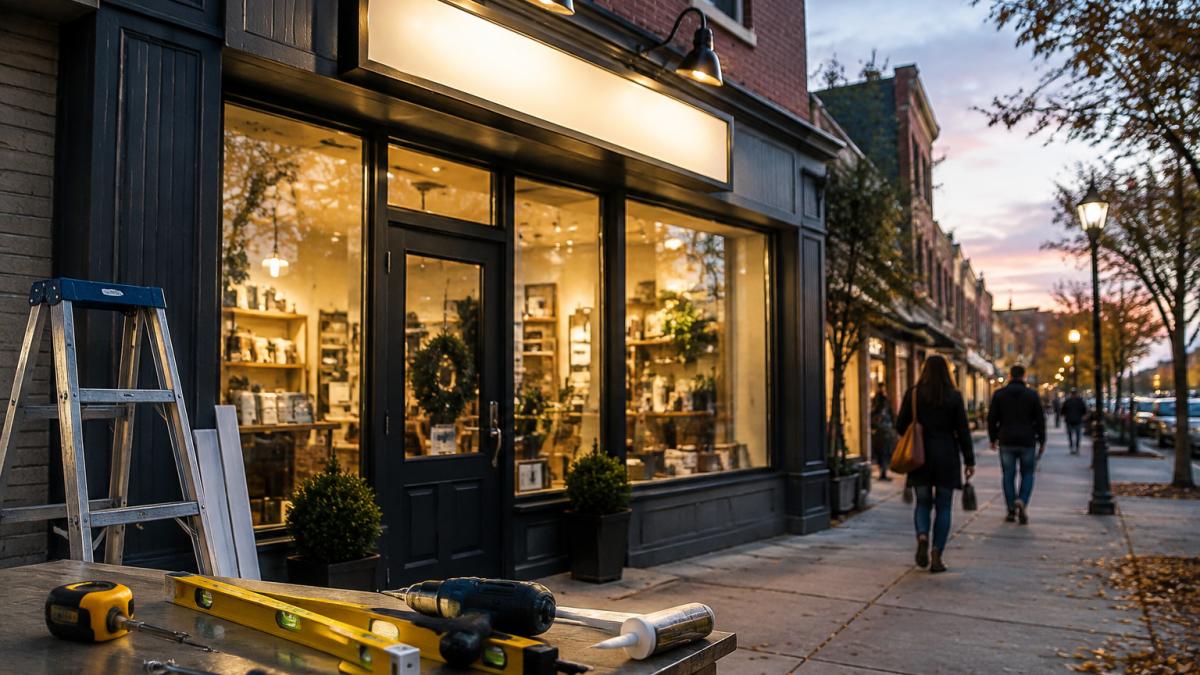
Check the view at night. Stand where a customer would be and look at the sign from the street. If the glow is too harsh, or if the light spills into a neighboring window, adjust the angle or brightness.
Step 5: Use LED Business Sign Benefits to Support Your Case
LED lighting generally uses less electricity than many older lighting types, which can keep operating costs lower over time. The case that convinces a manager, partner, or landlord is a number that ties the sign to evening revenue.
The efficiency case in concrete terms
The comparison that matters is lumens per watt. Modern LED signage modules commonly deliver far more light per watt than the fluorescent and neon sources they replace, and they hold their output longer before dimming. That means two things for a storefront:
- Lower run cost. A sign that runs five to six hours each evening draws a small, predictable load. Multiply the fixture wattage by the evening hours and your local electric rate to get the monthly cost, then compare it with the older fixture it replaces.
- Fewer service calls. LED modules are rated in tens of thousands of hours, so the replacement interval is measured in years rather than months. The savings show up as avoided labor and lift-equipment charges, not just bulbs.
A simple ROI framework for evening foot traffic
Most sign vendors stop at 'brighter signs bring more customers.' A defensible business case needs a measurement loop. Use this framework:
- Establish a baseline. For two to four weeks before the sign goes up, count evening walk-ins during your core evening window (for example, the last three hours before close). Use a door counter, a POS timestamp report, or a simple manual tally.
- Isolate the sign's effect. After installation, keep hours, staffing, promotions, and menu or pricing unchanged for the same window, then compare the evening count with the baseline. If you change a promotion at the same time, you cannot attribute the lift to the sign.
- Convert impressions to visits. Estimate evening impressions from the traffic that passes your storefront during lit hours, then divide added evening walk-ins by those impressions to get a rough conversion rate. Track it monthly.
- Compare against cost. Divide the total installed cost (sign, electrical, permit, installation) by the added evening gross margin per month to get a payback period in months. If the payback is longer than the sign's expected service life, the design or placement needs rework.
- Recheck seasonally. Evening daylight shifts through the year, so rerun the baseline each season; a sign that lifts traffic in winter darkness may show a smaller effect in summer.
The brand-recognition argument
A consistent brand look across your sign, window graphics, and printed materials can help shoppers recognize you. Pair that with your own measured evening results to build a business case.
Watch out: If you change your hours, promotions, or exterior lighting at the same time as the sign installation, you lose the ability to attribute any traffic change to the sign, so stagger the changes.
Step 6: Set a Lighting Schedule and Maintenance Routine
Set your sign to turn on at dusk and off at closing, using a timer or photocell. A sign that runs during daytime hours wastes energy, and one that goes dark too early misses evening shoppers.
Create a simple maintenance routine:
- Clean the face and lens monthly so the glow stays bright.
- Check for flickering or dead sections each week.
- Inspect wiring and mounts every few months.
- Replace graphics when colors fade or edges peel.
Your Next Step: Plan Your Illuminated Sign Order
Illuminated signs can help bring evening traffic to your door when they meet local rules, sit in the right spot, and stay lit on schedule. Start with your zoning check, pick a sign type that fits your storefront, and get quotes from a few vendors. Then review the custom signage for small business branding options to find a design that fits your brand. At 2mepromo.com, our team can help you match a sign to your space and budget. Request a quote today and get your evening sign project moving.
Frequently Asked Questions
How much do illuminated signs cost?
Costs vary widely with size, sign type and installation. Lit displays from 2mepromo.com range from a $258.93 wall-mount snap frame backlit display to a $2,200.00 10 foot pop up back lit display, and a 20 ft. EZ Tube Connect Backlit kit is listed at $6,629.43. Before you order, compare the kit contents, graphic options and shipping terms so you are pricing like for like.
Do I need a permit for an illuminated business sign?
Illuminated signs are often regulated by local zoning codes, which can limit size, height, brightness and hours of operation. Contact your local planning or building department before you order, because rules differ by location.
Are LED illuminated signs energy efficient?
LED lighting generally uses less electricity than older incandescent or fluorescent sign lighting, which lowers operating costs over the life of the sign. The 2mepromo.com wall mount snap frame, for example, uses LED lights around the perimeter with an acrylic diffuser for even light. Actual savings depend on your sign size and daily operating hours.
Which type of illuminated sign works best for evening foot traffic?
Backlit fabric displays and wall-mounted lit frames work well for eye-level messaging that stays readable from the sidewalk after dark. Pop-up and modular tube displays suit events and temporary locations. Choose based on where pedestrians will see the sign and how often you need to change the graphic.

- Choosing a selection results in a full page refresh.
