Your cart is empty
Looks like you haven't added anything to your cart yet







Bulk Custom Water Bottles for Events: 2026 Guide
Table of Contents
- Why Bulk Custom Water Bottles Work for Events
- Choosing the Right Bottle Material and Size
- Customization Options: Printing vs. Engraving
- Bulk Ordering and Wholesale Pricing
- Promotional Drinkware for Corporate Events: A Case Study
- Understanding Lead Times for Custom Promotional Items
- Common Mistakes to Avoid When Ordering
- Conclusion: Your Event Branding Partner
- Frequently Asked Questions
Last Updated: September 4, 2026
Why Bulk Custom Water Bottles Work for Events
Few promotional items deliver the daily visibility of a water bottle. When an attendee carries a bulk custom water bottles for events order home, that bottle becomes a reusable advertisement that travels to the gym, the office, and the commute for months.

Unlike flyers or brochures that get discarded within hours, a durable bottle earns a permanent spot in a bag or on a desk, keeping your name in front of key audiences long after the trade show floor has been packed up.
Wholesale pricing on bulk orders drives the unit cost down to a point where the per-impression expense becomes remarkably efficient. For a conference with 500 attendees, the total investment often rivals a single digital ad campaign, yet the physical item delivers repeated, tangible brand recognition that a screen-based impression cannot replicate.
Promotional Products Association International research on promotional item effectiveness has documented that promotional products consistently rank among the most memorable advertising formats. Recipients tend to hold onto useful items, and a water bottle ranks high on that utility scale.
Choosing the Right Bottle Material and Size
The material you choose determines not just the unit cost but also the perceived value, durability, and how well your logo will hold up over time. Each option carries distinct trade-offs that event planners should weigh against their audience and budget.
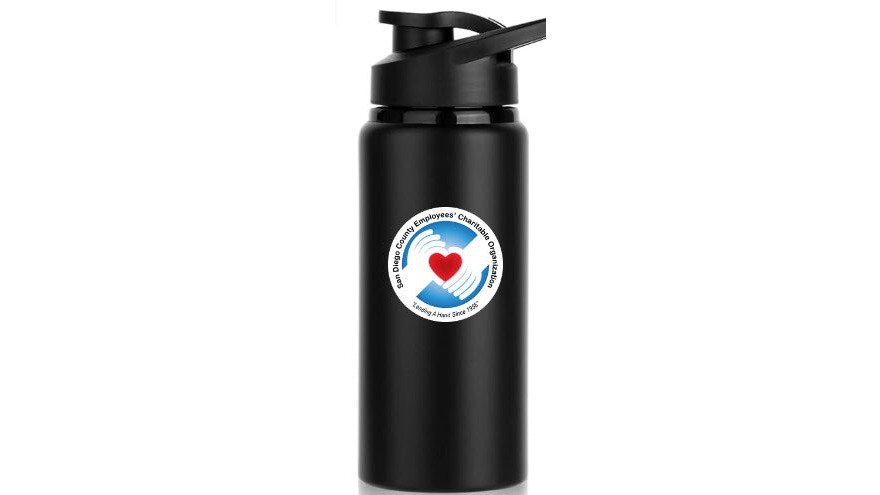
Plastic Bottles: The Volume Play
Plastic is the default for large-scale giveaways where budget is the primary constraint. Most promotional plastic bottles are made from PET or Tritan copolyester. PET is lightweight and inexpensive but not designed for repeated dishwashing (the FDA). Tritan is a step up: it is BPA-free, resists impact, and can handle hundreds of wash cycles without clouding or retaining odors.
For events like 5K races, community festivals, or student orientations where the bottle is more of a souvenir than a daily carry item, a 17 oz to 20 oz Tritan bottle delivers adequate durability at a price point that allows wide distribution. The trade-off is tactile: plastic feels less premium, and screen-printed logos will eventually crack or peel in a dishwasher.
Stainless Steel: The Premium Statement
Stainless steel bottles signal quality. A double-wall vacuum-insulated steel bottle keeps drinks cold for up to 24 hours, making it a functional tool rather than a branded trinket (the NIH). That functionality is why steel bottles stay in rotation far longer than plastic ones, and why they generate more impressions per dollar over the lifetime of the item.

The cost is the barrier. For a 500-person conference, that difference between plastic and premium steel can mean additional spend. A C-suite leadership summit justifies the higher cost; a public job fair likely does not.
Steel also opens up better customization options. Laser engraving on steel produces a permanent, high-contrast mark that will not fade or peel. Powder-coated steel accepts screen printing well, but the coating can chip if the bottle is dropped, exposing the raw metal underneath.
Aluminum: The Middle Ground with a Caveat
Aluminum bottles are lighter than steel and cheaper to produce. However, most require an interior lining, usually an epoxy or polymer coating, to prevent the metal from reacting with acidic beverages. That lining can degrade over time, rendering the bottle unsafe for daily use. If you choose aluminum, confirm the lining is food-grade and BPA-free, and be aware its lifespan will be shorter than stainless steel.
Sizing: Match Capacity to the Event Type
Capacity is a functional decision, not just a packaging detail. A 17 oz bottle fits standard cup holders and most backpack side pockets, making it the most versatile size for conference attendees. It holds roughly one standard bottle of water plus a little extra, enough for a few hours of hydration but not a full day.
A 25 oz or 26 oz bottle suits longer events like multi-day conferences, outdoor festivals, or sporting events where attendees need to refill less frequently. The larger size also provides a bigger imprint area for fine details or a long organization name.
For events where attendees move between sessions or venues, a bottle with a carabiner lid or carry loop adds practical value. The 2mepromo.com catalog includes a vacuum insulated carabiner lid 26 oz bottle that clips onto a bag strap, a small feature that increases the likelihood the bottle gets carried, not left behind.
A Practical Decision Framework
Rather than starting with a material, start with three questions:
- What is the per-unit budget after customization? If it is under $5, plastic is the only realistic option. If it is $10-$15, steel becomes viable.
- How long should the bottle remain in use? For a single-event giveaway, plastic suffices. For a brand campaign meant to last a year or more, steel is the better investment.
- What does the audience already own? Frequent conference-goers have drawers full of plastic bottles. A steel bottle stands out; another plastic one does not.
Pro Tip
Order a physical sample before committing to a full bulk run. Material weight, lid quality, and print finish are difficult to judge from a product photo. Most suppliers offer sample units at cost, the $10-$20 investment is trivial compared to the risk of 500 underwhelming bottles.
Customization Options: Printing vs. Engraving
Your customization method determines how your logo looks on day one and how it holds up after months of washing and daily use. Screen printing applies ink to the bottle surface and works well for plastic bottles at lower quantities. Laser engraving cuts into the material itself, producing a permanent mark that will not fade, chip, or peel on stainless steel.
For small logos, engraving often outperforms printing. Fine details and thin lines stay crisp when etched into metal, whereas screen printing can blur intricate artwork at small sizes. A common mistake is submitting a logo with too much detail for the imprint area, resulting in a muddy design.
The Spectra Bottle 25 oz includes a 1-color imprint and lid assembly in the base price, which simplifies budgeting for large orders. Setup charges for printing plates or engraving templates typically apply once per design, not per bottle, becoming negligible when spread across a large bulk order.

Bulk Ordering and Wholesale Pricing
Wholesale pricing follows a simple principle: larger quantities reduce the per-unit cost. Most suppliers structure discounts in tiers, so the price per bottle drops as you cross quantity thresholds. Requesting quotes at multiple volume levels helps you find the sweet spot between budget and distribution goals.
| Bottle Option | Capacity | Material | Base Price | Best For |
|---|---|---|---|---|
| 17 oz CECO Bottle | 17 oz / 500 ml | Plastic | $15.00 | Commuters, general giveaways |
| Stainless Steel Bottle | 20 oz / 600 ml | Aluminum | $19.99 | Outdoor events, durability focus |
| Spectra Bottle | 25 oz | Plastic | $13.00 | Gyms, sporting events |
| Vacuum Insulated Bottle | 26 oz | Stainless Steel | $21.99 | Premium corporate swag |
The 2mepromo.com lineup includes a vacuum insulated carabiner lid 26 oz bottle that keeps drinks cold for hours, a feature that adds perceived value far beyond its wholesale cost. When budgeting, factor in the full cost including any customization fees, not just the base bottle price. The base prices shown above reflect the bottle only; imprint costs vary by method and complexity.
Promotional Drinkware for Corporate Events: A Case Study
Consider how promotional drinkware for corporate events functions as a long-term branding asset rather than a single-day giveaway. A corporation hosting an annual user conference might order stainless steel bottles with a laser-engraved logo. Attendees use those bottles during the event, then carry them into client meetings and team rooms for years.
The durability of the product extends the life of the campaign. A vacuum insulated bottle that performs well becomes a trusted daily item, and every refill reinforces the brand connection. This is why organizations focused on sustainability messaging often prefer reusable bottles over single-use promotional items; the bottle itself demonstrates a commitment to reducing waste.
For government agencies and nonprofits, the tax-deductible nature of certain promotional orders adds another layer of value. The 17 ounce water bottle CECO TAX DEDUCTIBLE option acknowledges this consideration directly. When evaluating vendors, confirm that you receive proper documentation for your procurement records.
Understanding Lead Times for Custom Promotional Items
Lead times for custom promotional items vary significantly based on the customization method and order size. Screen printing typically requires less production time than laser engraving, though both need to account for art proof approval and shipping. A safe planning window for most bulk orders is three to four weeks from order confirmation to delivery.
The art proof stage is where delays most often occur. Every round of revision adds days to the timeline, so submitting clean, production-ready artwork on the first pass accelerates the entire process. If your organization lacks in-house design expertise, request guidance on file preparation before you place the order.
Rush orders may be possible for urgent events, but they carry trade-offs. Expedited production often limits your customization options and increases costs. For event planners working backward from a fixed date, the safest approach is to order early and build in buffer time for unexpected delays in shipping or proof approval.
Common Mistakes to Avoid When Ordering
The gap between a successful bulk bottle order and a logistical headache usually comes down to planning decisions made weeks before the event. Beyond the obvious pitfalls of underestimating quantity or submitting low-resolution artwork, event planners consistently stumble on the same operational details.
Mistake 1: Miscalculating Quantity Based on Attendance Alone
Ordering one bottle per registered attendee ignores real-world distribution dynamics. A standard rule of thumb is to order 10-15% above your expected headcount. Walk-ins, last-minute registrations, and event staff all need bottles. If you run out, the attendees who came late, often the ones you most want to impress, leave empty-handed.
For multi-day events, consider whether attendees will return each day or whether you are distributing to a fresh audience daily. A three-day conference with 1,000 unique attendees may only need 1,000 bottles if distribution happens once. But if you are handing out bottles at a booth each day, you need enough for daily traffic, not just total registrations.
Mistake 2: Ignoring the Distribution Plan Until the Bottles Arrive
A bulk order of 500 bottles arrives as several heavy boxes. Moving them from a loading dock to a booth or registration table requires planning. Confirm with the venue whether you can receive shipments directly or must route through a freight elevator or receiving department. Ask about receiving hours, many venues only accept deliveries during specific windows, and missed windows mean your bottles sit in a warehouse until the next day.
If you are distributing at multiple locations, say, a main entrance and two breakout rooms, you need a plan to split the inventory before the event starts. Allocate bottles per station based on expected traffic, and keep a small reserve at a central location for restocking.
Mistake 3: Overlooking Storage Conditions
Bottles are more fragile than they look. Plastic bottles can warp if stored in a hot vehicle or warehouse. Stainless steel bottles scratch if stacked loosely and shifted during transport. Powder-coated finishes are especially prone to chipping when bottles knock against each other.
Store bottles in their original packaging until distribution day. If you must remove them from boxes to apply labels or stage them, lay them flat in a single layer rather than piling them. Keep them away from direct sunlight and temperature extremes. A climate-controlled storage room is ideal; a car trunk in August is not.
Mistake 4: Forgetting the Refill Logistics
A reusable bottle is only useful if attendees can fill it. If your event venue lacks accessible water refill stations, your branded bottle becomes an inconvenience rather than a benefit. Before finalizing your order, check the venue's hydration infrastructure. If refill stations are scarce, consider whether a different giveaway item makes more sense, or work with the venue to add temporary water stations.
This consideration also affects bottle size. At a venue with plentiful refill stations, a smaller 17 oz bottle is fine. At an outdoor event where water sources are limited, a larger 25 oz or 26 oz bottle reduces the number of trips attendees need to make.
Mistake 5: Treating the Art Proof as a Formality
The art proof stage is where delays and quality issues originate. Review the proof on a screen at 100% zoom, not just as a thumbnail. Zoom in on your logo's smallest details and check how they reproduce at the actual imprint size. If your logo includes fine text or thin lines, ask the supplier to show you a scaled mockup on the bottle shape you selected, a logo that looks crisp on a white background may look muddy when printed on a colored bottle.
Also verify the imprint color against the bottle color. A dark logo on a dark bottle will disappear. Most suppliers offer a limited set of standard imprint colors; custom Pantone matching is available but adds cost and lead time.
A Pre-Order Checklist
Before you submit your order, confirm you have answers to these questions:
- Have I ordered 10-15% above expected attendance?
- Have I confirmed the venue's receiving hours and delivery dock access?
- Do I have a clean, climate-controlled storage space for the bottles?
- Does the venue have adequate water refill stations for the expected crowd?
- Have I reviewed the art proof at actual imprint size and checked color contrast?
- Have I confirmed the lead time includes buffer days for shipping delays?
- Do I have a distribution plan for multiple event locations?
Watch Out
Do not wait until the week before your event to think through distribution. Venue receiving schedules, storage constraints, and refill station availability are all outside your control, verify them early or plan around them.
Conclusion: Your Event Branding Partner
Selecting the right vendor for your bulk custom water bottles for events requires attention to material quality, customization methods, and realistic lead times. The most successful campaigns treat the bottle as a strategic asset, not just a giveaway, and plan the artwork and logistics with the same care as the event itself.
2mepromo.com supports government agencies and small businesses with tailored promotional drinkware, custom apparel, and professional signage designed to enhance brand identity. Our expert team provides personalized branding solutions, from custom tents to electronic promotional tools, ensuring your organization stands out at events and in the office. Get started with 2mepromo.com and make your next event memorable with branded merchandise that lasts.
Frequently Asked Questions
How far in advance should I order custom water bottles for an event?
For a standard order, plan for 2 to 3 weeks of lead time. This includes production and shipping. If you need a large quantity or complex logo, start 4 to 6 weeks out. This buffer covers the art proof process and any unforeseen delays. Always confirm the exact turnaround time for your specific bulk custom water bottles order before you pay.
What is the difference between screen printing and laser engraving for bulk orders?
Screen printing applies ink onto the bottle's surface, offering vibrant color options and a lower per-unit cost for large quantities. Laser engraving burns your logo into the material itself, creating a permanent, scratch-resistant mark that is ideal for stainless steel. Choose screen printing for cost-effective color and engraving for a premium, durable finish.
How many custom water bottles do I need for an event of 100 people?
Order one bottle per expected guest, plus a 10-15% buffer. For 100 guests, that means ordering 110 to 115 bottles. This ensures you have enough for late arrivals, unexpected attendees, and those who may want a second one. The unit cost is often lower with a slightly larger bulk order.
Are there eco-friendly options for bulk branded water bottles?
Yes. Stainless steel bottles are a durable, long-term alternative to single-use plastic. Many plastic options are also BPA-free and reusable. Choosing a high-quality, reusable bottle is a sustainable choice that positions your brand as environmentally conscious and gives attendees a lasting reminder of your event.
This article was written using GrandRanker
- Choosing a selection results in a full page refresh.
