Your cart is empty
Looks like you haven't added anything to your cart yet







7 Creative Ways to Use Modular Lightbox Displays
Last Updated: November 16, 2026
Quick Summary
A modular lightbox is a backlit frame system that holds printed fabric graphics and can be rebuilt into different shapes and sizes, so one kit serves as a wall, a sign, and a counter. Creative uses include backlit product walls, hanging signs, pop-up counters, retail window displays, and lit stage backdrops.
- A 10 x 10 booth fits one back wall and one side wall, leaving two sides open.
- Keep hanging sign graphics to a logo and five words or fewer.
- Setup takes five steps: lay out profiles, connect frame, stand it, fit graphic, power lights.
- Clean graphics with a lint roller, not water, and steam out creases instead of ironing.
- A bent corner connector is the most common failure, usually from loose packing.
Ready to light up your next booth?Modular lightbox displays with tool-free frames and backlit fabric graphics, built for events and retail.
Shop Lightbox Displays
Table of Contents
- Why Modular Lightbox Displays Belong in Your Event Kit
- Modular Lightbox Display Ideas for Trade Show Booths
- Portable Modular Lightbox Displays for Pop-Up Events
- Backlit SEG Displays That Turn Heads in Retail
- Lightbox Exhibition Stand Design Ideas for Corporate Events
- Step-by-Step Setup for Your First Lightbox Configuration
- Budget, Maintenance, and Measuring Display Performance
- Order Your Modular Lightbox Display Today
- Frequently Asked Questions
Why Modular Lightbox Displays Belong in Your Event Kit
A modular lightbox display is a backlit frame system that holds printed fabric graphics and can be rebuilt into different shapes and sizes. In practice, these systems can replace several separate booth pieces because one frame set can serve as a wall, a sign, and a counter. The clever part is the frame grid: panels connect in different orders, so the same kit serves a trade show hall, a pop-up market, and a lobby. Below, we show you seven creative ways to use modular lightbox displays, plus the setup steps and budget questions most guides skip.
Backlit displays can draw the eye in a dim hall, where flat banners may blend into the background.
The 2026 trade show floor rewards displays people can see from the aisle. Here is what we cover:
- Backlit product walls and hanging sign focal points
- Pop-up layouts for small spaces
- Retail and corporate event configurations
- A step-by-step setup walkthrough
- Budget, maintenance, and performance tracking
Modular Lightbox Display Ideas for Trade Show Booths
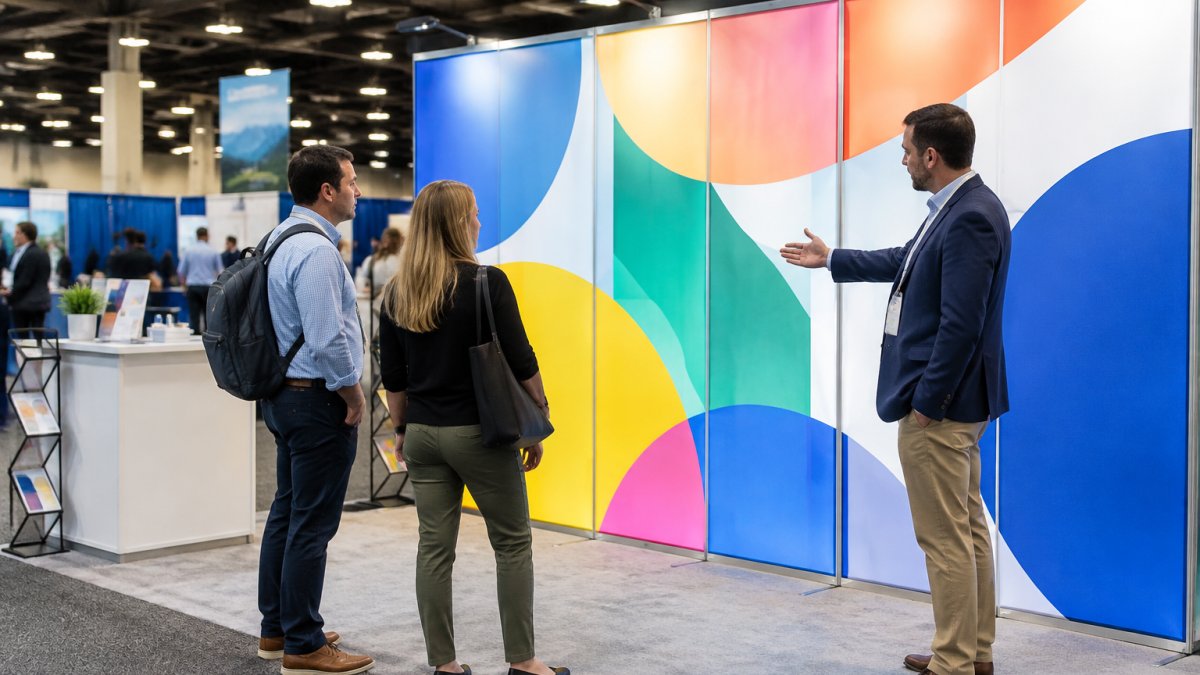
A trade show setup can use one lightbox as a hero wall and a second as a directional sign.
Match the Configuration to Your Booth Footprint
A 10 x 10 booth has room for one back wall and one side wall, leaving two open sides for foot traffic. A 10 x 20 booth supports a U-shape with two side walls and a back wall, which channels visitors toward a demo area. A 20 x 20 island booth can carry four freestanding walls arranged as a room-within-a-room, with the open corner facing the main aisle.
Build a Backlit Product Wall
A backlit product wall is a lightbox frame lined with shelves or hooks, lit from behind the graphic so products sit against a glowing backdrop. Mount the frame at eye level and keep the graphic simple: a solid brand color with a short headline beats a busy photo. Products in front of light read as premium, and the glow separates your table from every flat banner nearby.
Create a Hanging Sign Focal Point
Hanging signs solve the visibility problem in a hall with high ceilings. A lightbox frame suspended above the booth shows your logo from across the floor, and the illuminated surface cuts through overhead glare. Keep the hanging graphic to a logo and five words or fewer. Attendees scan, not read, from that distance. Check venue rules before you plan a hanging display, since requirements for rigging and hang points vary by venue. A freestanding 8-foot tower is the fallback when rigging is not allowed.
Choose the Layout by Goal
Lead generation booths want a back wall with a clear offer and a counter unit near the aisle for badge scanning. Wayfinding booths want a tall directional sign at the corner of the footprint so attendees can read it from the cross-aisle. Product launch booths want a U-shape that funnels visitors toward a demo station, with the hero graphic on the back wall and product shelves on the side walls. Brand awareness booths want the widest, brightest surface facing the main aisle, even if that means fewer panels elsewhere.
Portable Modular Lightbox Displays for Pop-Up Events
Portable modular lightbox displays win at pop-ups because they pack into a travel bag and set up without tools. A farmers market, a lobby activation, or a one-day job fair needs a display that one person can carry in and build alone. Tool-free frames with push-fit connectors do exactly that.
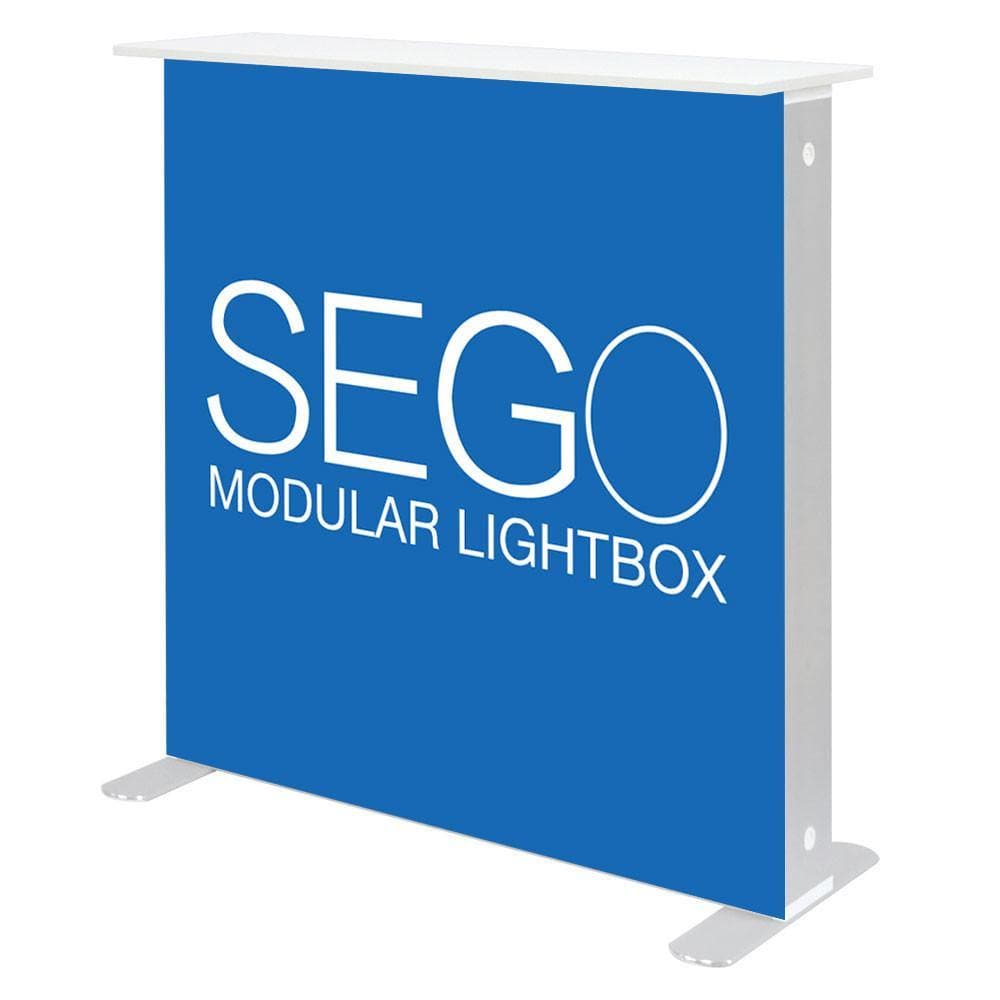
For a compact footprint, a counter-height lightbox doubles as a greeting station and a brand surface. The 3.3 x 3.3ft. SEGO Modular Lightbox Counter includes a countertop and a travel bag. Pair it with a taller frame behind it and a 10 x 10 space looks finished.
Backlit SEG Displays That Turn Heads in Retail
Backlit SEG displays use silicone edge graphics (SEG), which fit into a groove in the frame. The listings describe edge-to-edge customizable SEG backlit fabric graphics.
Retailers use these frames three ways:
- A freestanding illuminated wall behind a checkout to push a seasonal message
- A wall-mounted display in a window, lit to compete with street light
- An office partition that splits a sales floor while showing brand graphics on both sides
If you want more backdrop concepts to pair with a lightbox, these creative ideas for interactive event backdrops give you layouts to adapt.
Lightbox Exhibition Stand Design Ideas for Corporate Events
Corporate events can use a lightbox exhibition stand with a U-shape layout of two side walls and a back wall, leaving an open front for foot traffic.
For awards dinners and recognition programs, a lit backdrop behind the stage turns a plain ballroom wall into a brand moment. A single wide frame with a logo and event name does the job.
Step-by-Step Setup for Your First Lightbox Configuration
Setup can be done in a few steps, as follows. Here is the sequence we recommend:
- Lay out the profiles. Sort top, bottom, and vertical aluminum pieces by size before you build.
- Connect the frame. Push the corner connectors into the profiles.
- Stand the frame. Attach the feet and tip the frame upright with a second person steadying it.
- Fit the graphic. Press the silicone edge into the groove, starting at one top corner and working around.
- Power the lights. Connect the transformer and cables, then check that every LED strip lights evenly.
Budget, Maintenance, and Measuring Display Performance
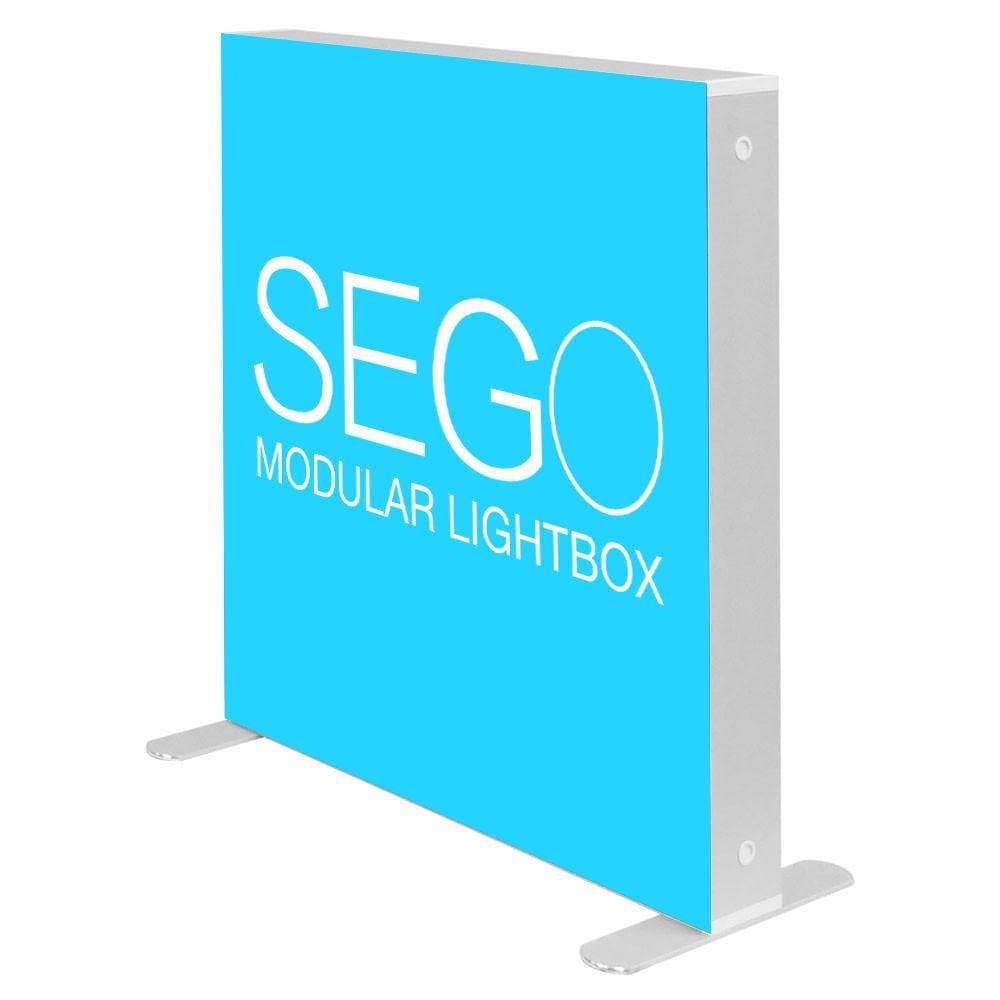
Plan the budget around four costs, not three: the frame, the graphics, the power accessories, and the transport and storage that keep the kit reusable. A small counter unit runs about $743, a mid-size panel about $1,166, and a large wall about $2,355, based on our current SEGO modular lightbox display listings.
Understand What Drives the Cost
Frame cost scales with panel count and profile size, not with graphic area alone. A two-panel wall and a four-panel wall of the same height differ mainly in the number of vertical profiles and connectors, so the per-panel cost drops as the kit grows. Graphic cost scales with printed area and with the number of colors, because backlit fabric needs a dye-sublimation print that holds up under LED heat. Power accessories, transformers, cables, and connectors, are a small line item per panel but add up on a multi-panel wall, and a spare transformer is cheaper than a dark panel at a show.
Maintain the Frame and the Graphic Separately
Maintenance splits into two routines. For the graphic: wipe with a lint roller, not water, because moisture can wick into the silicone edge and stain the fabric; steam out packing creases before the show rather than ironing, which can glaze the print. For the frame: store profiles in the padded travel bag to protect corners, check LED connectors before each event, and keep spare transformers on hand for multi-panel setups. A bent corner connector is the most common failure, and it usually comes from loose packing, not from assembly.
Troubleshoot Uneven Illumination
If one panel is dimmer than its neighbors, check three things in order: the transformer output, the connector seating at the panel joint, and the LED strip orientation. A partially seated connector is the usual cause, and reseating it fixes the panel without a replacement part. If a single LED strip is dark along one edge, the strip has failed and the panel needs service; most modular systems let you replace the strip without replacing the frame.
Measure Performance with Three Numbers
Measure performance with three numbers: booth traffic count, dwell time, and leads captured. Compare a show with the lightbox against one without it and the difference in dwell time tells you whether the glow is earning its space. A common pattern is to run the lightbox at one show and the flat display at the next, then compare leads per attendee rather than total leads, because foot traffic varies by show. Over a year, the reuse value shows up as fewer replacement purchases and lower per-event graphic cost, which is the number to bring to a budget review.
Here are the key budget, maintenance, and performance figures the article gives for modular lightbox displays.
| Item | Value | Note |
|---|---|---|
| Small counter unit | About $743 | Based on current SEGO modular lightbox display listings |
| Mid-size panel | About $1,166 | Based on current SEGO modular lightbox display listings |
| Large wall | About $2,355 | Based on current SEGO modular lightbox display listings |
| Graphic cleaning | Lint roller, not water | Moisture can wick into the silicone edge and stain fabric |
| Crease removal | Steam, do not iron | Ironing can glaze the print |
| Most common failure | Bent corner connector | Usually comes from loose packing, not assembly |
| Performance metrics | Booth traffic count, dwell time, leads captured | Compare leads per attendee, not total leads |
Cost of modular lightbox display options
Small counter unit About $743
Mid-size panel About $1,166
Large wall About $2,355
Order Your Modular Lightbox Display Today
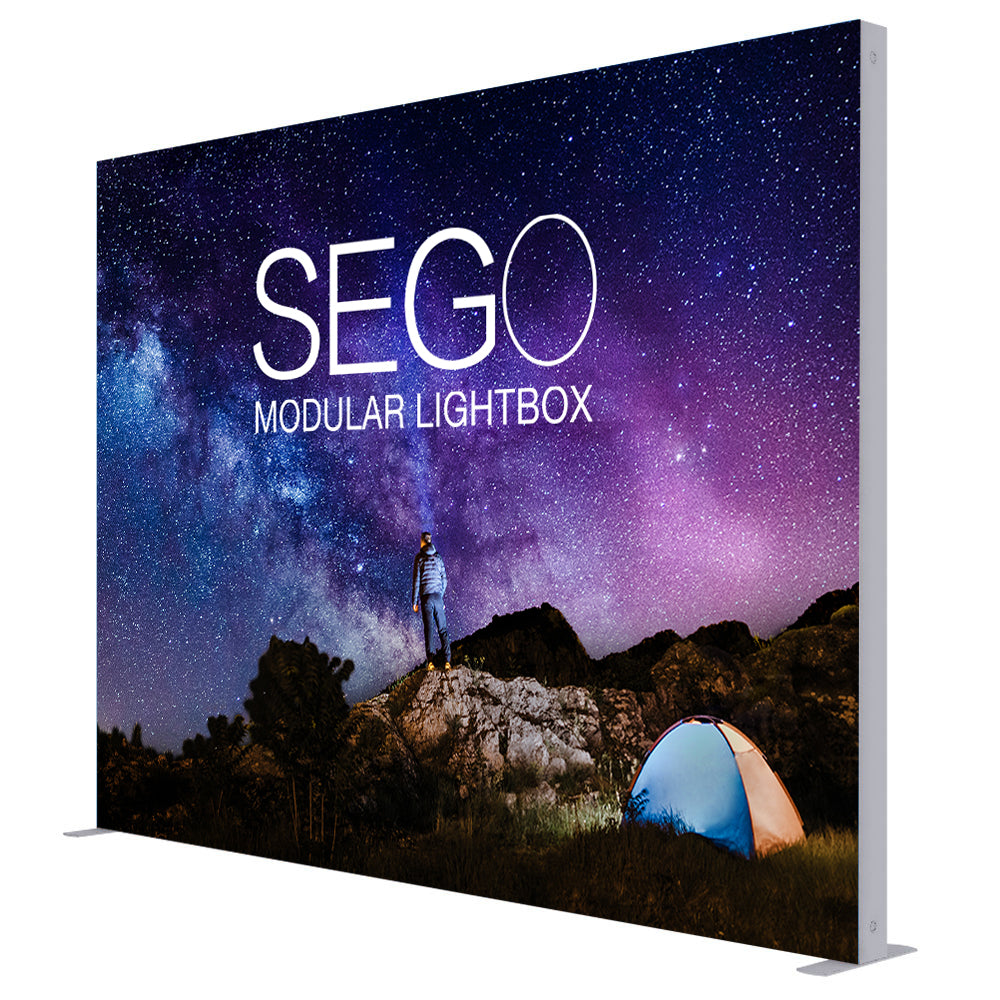
If you are ready to buy, the 9.8 x 8ft. SEGO Modular Lightbox Display gives you a large backlit wall with a travel bag included. For a narrower option, the 3.3 x 8ft. SEGO Modular Lightbox Display has a 3.3 ft. width.
Building a display kit that works across trade shows, pop-ups, and recognition events takes the right frame system and graphics that hold up. 2mepromo.com supplies modular lightbox displays with tool-free frames, dye-sublimated SEG fabric graphics, and travel bags for transport. Our team helps you pick panel sizes that fit your space and your brand guidelines. Get started with 2mepromo.com and build a display that pulls a crowd at every event.
Frequently Asked Questions
How can modular lightbox displays be used at events?
Modular lightbox displays work as backlit backdrops, product walls, hanging signs, and freestanding exhibition stands. They can be used at trade shows and corporate events, and the SEGO line features edge-to-edge customizable SEG backlit fabric graphics. Because the frames connect, you can build a single illuminated wall or a multi-panel configuration that fits the venue. The 3.3 x 8ft. SEGO Modular Lightbox Display, for example, ships with a travel bag and assembles without tools, making it practical for one-day and multi-day events alike.
Can modular lightbox displays be reused for different events?
Yes. The modular frame system lets you swap dye-sublimated SEG fabric graphics without replacing the hardware. You can reconfigure frames into new shapes, connect additional panels, or change the graphic to match a different campaign. The SEGO Modular Lightbox Display includes a durable foam cut carry bag that keeps profiles and feet organized between events.
How do you make a lightbox display more engaging?
Start with high-contrast backlit SEG graphics that use bold typography and a clear call to action. Layer the display with a product showcase or counter so visitors have a reason to stop. Use consistent LED illumination across panels to avoid hot spots, and keep the graphic message focused on one idea per panel. Adding a hanging sign above eye level increases visibility from across the hall. Finally, place the display where foot traffic naturally slows, and train staff to use the illuminated wall as a conversation starter rather than background decor.
What should I check before buying a portable modular lightbox display?
Confirm the display dimensions fit your booth space and vehicle. The 3.3 x 3.3ft. SEGO Modular Lightbox Counter measures 39 inches wide by 39 inches high by 16.5 inches deep and ships at 28.5 lbs. Check that the frame uses tool-free assembly and that LED strips are pre-installed with magnetic connectors. Ask whether a travel bag is included and whether the graphics are single or double sided. Also verify the turnaround time, since some SEGO models ship in two business days.

- Choosing a selection results in a full page refresh.
