Your cart is empty
Looks like you haven't added anything to your cart yet








How to Transport Large Event Backdrops Safely
Last Updated: October 23, 2026
Quick Summary
To transport large event backdrops safely, identify your backdrop material and dimensions first, then choose the appropriate method: lay paper backdrops flat with protective covering, roll vinyl and canvas tightly with soft straps, protect foam board from crushing, and secure wooden backdrops with padding to prevent shifting. Use protective tubes or hard carrying cases for maximum protection during transit.
- Paper backdrops must stay flat and dry; roll only in protective tubes wrapped with acid-free tissue to prevent creasing
- Vinyl and canvas backdrops roll tightly and secure with soft straps or Velcro bands, never rope or cord
- Foam board and rigid backdrops require edge guards and padding to prevent crushing and denting during transport
- Wooden backdrops can weigh 100 pounds or more; verify your vehicle suspension and tires are rated for the load
- Secure all backdrops with at least two tie-down straps and check your load every 100 miles on long trips
Table of Contents
- Assess Your Backdrop Material and Dimensions
- How to Pack a Fabric Backdrop for Transport
- Selecting the Right Event Backdrop Carrying Case
- How to Secure a Backdrop in a Vehicle
- Safe Lifting and Team Handling Techniques
- Backdrop Setup and Breakdown Tips
- Frequently Asked Questions
Assess Your Backdrop Material and Dimensions
The first step in safely transporting large event backdrops is understanding what you're moving. Different materials require different protection strategies. A vinyl banner needs different handling than a wooden frame. Foam board demands different care than paper.
Start by identifying your backdrop type and measuring its dimensions. Learn how to design professional event backdrops to understand the principles behind effective backdrop choices. Write down the width, height, and weight. This information determines which transport method and vehicle you'll need.
Paper backdrops
Paper backdrops are lightweight but fragile. They crease easily and tear if bent sharply. Moisture is your enemy, water damage ruins them instantly.
Transport paper backdrops flat whenever possible. Lay them in your vehicle on a clean, dry surface.
If you must roll a paper backdrop, use a protective tube. Wrap the backdrop in acid-free tissue first. This prevents the paper from sticking to the tube interior.
Vinyl and canvas backdrops
Vinyl and canvas are durable and flexible. They handle rolling well. Moisture won't destroy them, but prolonged dampness can cause mildew or mold.
Rolling is your best option for vinyl and canvas. Lay the backdrop face-down on a clean surface. Roll it tightly from one end, keeping it straight as you go. This prevents twisting and uneven tension.
Secure the rolled backdrop with soft straps or Velcro bands. Avoid tight rope or cord that can cut into the material.
Foam board and rigid backdrops
Foam board is lightweight but crushes under pressure. Rigid backdrops made from plastic or composite materials are heavier but more durable.
Never fold foam board. Transport it flat or standing upright in your vehicle. Protect the edges and corners with foam padding or edge guards.
For rigid backdrops, secure them so they can't shift during driving. Use padding between the backdrop and any hard surfaces. Strap them down firmly but not so tight that you damage the material.
Wooden backdrops
Wooden backdrops are heavy and rigid. They don't flex, so they won't crease. The main risks are scratches, dents, and shifting during transport.
Wrap wooden backdrops in blankets or moving pads. Secure the padding with tape so it stays in place. Load them into your vehicle last so nothing sits on top of them.
Check that your vehicle can handle the weight. A wooden backdrop can weigh 100 pounds or more depending on size and construction.
Different backdrop materials require specific handling approaches during transport.
| Material | Best Transport Method | Key Protection Need |
|---|---|---|
| Paper | Lay flat | Shield from moisture and creasing |
| Vinyl and canvas | Roll tightly | Prevent mildew from prolonged dampness |
| Foam board | Lay flat or stand upright | Protect edges and corners from crushing |
| Wooden | Lay flat, load last | Secure to prevent shifting and weight damage |
How to Pack a Fabric Backdrop for Transport
Packing your backdrop correctly prevents damage and makes setup faster at your event. A well-packed backdrop arrives in perfect condition. A poorly packed one arrives creased, torn, or dusty.
Start with a clean, dry workspace. Lay your backdrop on a clean floor or table. Remove any dirt or debris. Check for existing damage before packing, you want to know what condition it was in before transport.
Rolling versus folding
Rolling is almost always better than folding for fabric backdrops. Rolling prevents creases. Folding creates permanent crease lines that are hard to remove even with a steamer.
Roll your backdrop tightly and evenly. Lay it flat, then start rolling from one edge. Keep tension consistent as you roll.
Folding works only for small backdrops you'll need to unfold and refold multiple times. Even then, use soft folds. Fold in thirds rather than quarters to minimize creases.
Using protective tubes and cases
A protective tube is your best investment for fabric backdrops. Tubes keep the backdrop clean, dry, and crease-free.
Wrap your rolled backdrop in acid-free tissue or kraft paper first. This prevents the fabric from sticking to the tube interior.
Hard carrying cases offer maximum protection. A hard case with wheels protects your backdrop from crushing, moisture, and impacts.

Soft bags work for smaller backdrops or less frequent transport. They're lighter and cheaper than hard cases.
Selecting the Right Event Backdrop Carrying Case
The right carrying case depends on your backdrop size, material, and how often you transport it. A case that works for small paper displays won't work for a large vinyl banner. A case you use once a year is different from one you use weekly.
Measure your backdrop when rolled or folded. Measure the length, diameter, and weight. Compare these dimensions to case specifications. The backdrop must fit inside comfortably, cramming it in can cause damage.
Hard cases for maximum protection
Hard cases protect your backdrop from crushing, impacts, moisture, and dust. They're built from molded plastic or composite materials. They have wheels and handles for easy transport.
The Half Hard Case is designed for fabric displays up to 8 feet wide. It features inset wheels for smooth rolling and dual handles for vertical or horizontal carrying. The case protects your display during transport and can display a custom graphic wrap at your event, turning it into a branded podium or stand.
The LACAJA Hard Case holds 10-foot by 10-foot canopies. It's rectangular, so it stacks and fits into tight spaces better than rounded cases.
The Medium Hard Case fits displays up to 10 feet. It has an oval shape and center handle grip. Inset wheels make it easy to roll through crowded venues or across parking lots.
Soft bags for smaller displays
Soft bags are lighter and cheaper than hard cases. They work well for small backdrops, flags, or displays you transport occasionally.
The Carry Bag for Falcon and Sunbird Flags holds flag poles, graphics, spike bases, and collapsible X-bases. It's designed for portability and durability.
Soft bags are easier to store when empty. They fold flat and take up minimal space in your office or storage room. This makes them ideal for businesses with limited storage space.
How to Secure a Backdrop in a Vehicle
Once your backdrop is packed, securing it properly in your vehicle prevents shifting, damage, and accidents. Explore portable trade show booth ideas that complement safe backdrop transportation strategies. A loose backdrop can slide around during braking or turns. It can block your view. It can damage itself and your vehicle interior.
Measuring your cargo space
Before loading, measure your vehicle's cargo area. Measure the length, width, and height. Account for wheel wells, door frames, and any permanent fixtures. Measure twice, an ill-fitting load is dangerous.
Compare your backdrop dimensions to your cargo space. The backdrop should fit with at least a few inches of clearance on all sides.
Consider the weight distribution. Heavy items should sit low and toward the center of the vehicle. This keeps your vehicle stable and prevents tipping.
Using tie-downs and straps
Secure your backdrop with tie-downs or cargo straps. These prevent movement during acceleration, braking, and turning.
Loop straps through tie-down points on your vehicle.
Soft straps are better than rope or cord. Rope can cut into soft cases or fabric. Straps distribute pressure evenly.
Use padding between the backdrop and hard vehicle surfaces. Blankets, foam sheets, or moving pads protect the backdrop from dents and scratches.
Protecting against weather and road conditions
Weather and road debris can damage your backdrop during transport. Rain can seep into soft cases.
Cover your backdrop with a tarp or weatherproof cover if it's exposed. Secure the cover so wind doesn't blow it off.
Check your load before driving. Make sure everything is secure. Make sure nothing is blocking your mirrors or windows.
Stop and check your load every 100 miles on long trips. Vibration can loosen straps. Shifting can create new pressure points.
Safe Lifting and Team Handling Techniques
Large backdrops are heavy. Lifting them incorrectly causes injuries.
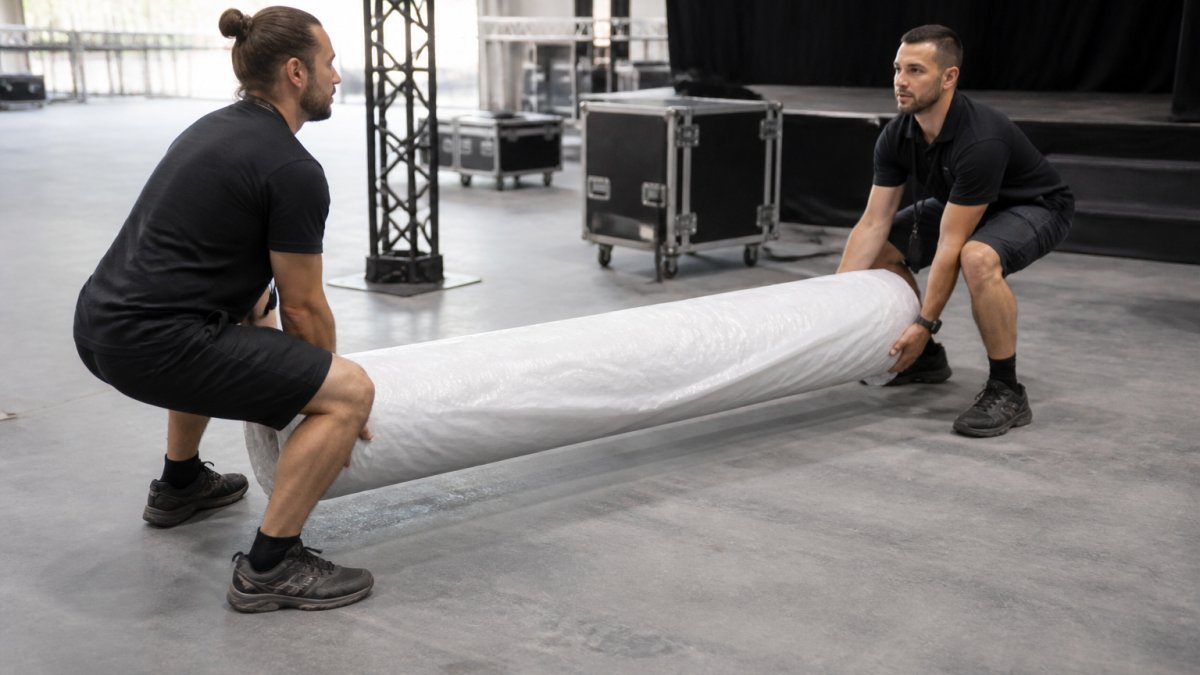
Assign roles before lifting. One person guides from the front. One person guides from the back.
Bend at your knees, not your back. Keep your back straight.
For rolled backdrops in tubes, each person should grip the tube firmly.
For heavy wooden backdrops, use a dolly or hand truck whenever possible.
Never lift alone if the backdrop weighs more than 50 pounds. Get a helper.
Backdrop Setup and Breakdown Tips
Setup and breakdown are when most damage happens. Use your trade show display planning checklist to manage all aspects of event display logistics and ensure nothing is overlooked. Your backdrop has survived transport. Now you need to get it out of the case, install it, and eventually pack it up again.
Unloading and inspection procedures
Unload your backdrop carefully. Take your time. Rushing causes mistakes. Have helpers ready before you open the case.
Remove padding and protective covers gently. Don't rip or tear them, you'll need them for the next transport. Inspect the backdrop as you unpack it.
Check that all components are present. Count frame pieces, brackets, and connectors. Make sure nothing was left behind in the case.
Lay the backdrop on a clean, dry surface before installation.
Checking for damage before installation
Inspect your backdrop thoroughly before installing it. Look for wrinkles, creases, stains, dust, or tears.
Minor wrinkles often disappear once the backdrop is hanging and under tension.
If you find damage, photograph it and document the details.
Test all hardware and connections before hanging. Make sure frame pieces fit together properly.
The Half Hard Case is our top recommendation for fabric displays.
Start with the right carrying case. Follow the packing and securing steps in this guide.
Frequently Asked Questions
What is the best way to pack a fabric backdrop for transport?
Roll fabric backdrops tightly around a protective tube or PVC pipe rather than folding them, which creates permanent creases. Secure the roll with soft straps at 12-inch intervals, then place it in a protective tube or hard carry case. For extra protection, wrap the rolled backdrop in plastic sheeting before inserting it into its case. This method prevents wrinkles and surface damage while making the backdrop easier to handle and store after your event.
How do you secure a large backdrop in a vehicle safely?
Measure your backdrop and cargo area before loading to confirm it fits. Place the backdrop flat or rolled along the longest interior dimension of your vehicle. Use ratchet straps or tie-downs rated for the backdrop's weight, anchoring them to the vehicle's tie-down points or cargo anchor loops. Position straps every 2-3 feet along the load. Avoid placing heavy items on top of the backdrop, and keep it away from heat sources and direct sunlight during transit to prevent warping or fading.
What type of carrying case is best for an event backdrop?
Hard cases like the Half Hardcase ($256.92) or LACAJA Hard Case ($327.69) offer maximum protection for large backdrops during frequent transport and rough handling. Hard cases feature blow-molded plastic construction, inset wheels for easy mobility, and secure latches. For smaller displays or flags, soft carry bags work well and cost less. Choose based on your backdrop size, how often you transport it, and how much protection you need against impacts and weather.
How do you prevent a backdrop from getting damaged during transport?
Use a protective tube, hard case, or carrying bag to shield your backdrop from dust, moisture, and impacts. Roll rather than fold fabric backdrops to avoid permanent creases. Secure the load with tie-downs so it doesn't shift during driving. Cover the entire package with a tarp or plastic sheeting if transporting in an open vehicle. Inspect your backdrop immediately after arrival for any scratches, wrinkles, or moisture before unpacking and setting up at your event.

- Choosing a selection results in a full page refresh.
