Your cart is empty
Looks like you haven't added anything to your cart yet






Best Moisture-Wicking Fabrics: A Buyer's Guide for Company Athletic Wear
Last Updated: November 6, 2026
Quick Summary
The best moisture-wicking fabrics for company athletic wear are performance synthetics and treated natural fibers that pull perspiration off the skin and dry fast. Polyester is the workhorse choice, nylon adds durability, and merino wool offers natural odor control.
- Polyester wicks fast, holds color, resists wrinkles, and costs less per unit than alternatives.
- Nylon outperforms polyester on abrasion resistance, which matters for staff brushing against equipment.
- Merino wool dries slower than synthetics and costs more, limiting it to supervisory roles.
- Cotton dries slowly and offers poor sweat management, so it suits only low-exertion indoor roles.
- Ask suppliers for fabric weight, drying time, moisture transport, air permeability, abrasion resistance, and colorfastness.
Which wicking fabric fits your team?We help agencies and small businesses pick and decorate performance polos in bulk.
Request Apparel Quote
Table of Contents
- Why Moisture-Wicking Fabrics Matter for Company Athletic Wear
- How Moisture-Wicking Fabrics Move Sweat Away From the Skin
- Best Fabric for Sportswear: Comparing Polyester, Nylon, Merino Wool, and Cotton
- Moisture-Wicking vs Dri-FIT: What's the Difference?
- Choosing Custom Logo Athletic Shirts That Hold Up
- Bulk Order Checklist: Sizing, Decoration, and Lifecycle Cost
- Request a Quote and Order Your Team's Moisture-Wicking Apparel
- Frequently Asked Questions
Why Moisture-Wicking Fabrics Matter for Company Athletic Wear
The best moisture-wicking fabrics for company athletic wear are performance synthetics and treated natural fibers that pull perspiration off the skin and dry fast enough to keep a team comfortable through a full shift or event. The answer matters more than most buyers expect: a polo that holds sweat against the body turns a branded uniform into something employees quietly resent wearing.
That is the real cost of a bad fabric choice. Not the invoice, the noncompliance.
Moisture-wicking fabric is a textile engineered or treated to transport perspiration away from the skin to the outer surface, where it evaporates quickly. The goal is simple: keep the wearer dry, reduce chafing, and control odor during active work.
Three things drive the decision for a procurement officer:
- Sweat management during high-impact activity and outdoor assignments
- Durability under repeated laundering, since uniforms cycle far more than personal gym clothes
- Decoration compatibility, because a logo that cracks in month two defeats the purpose of branded apparel
Below, we break down how wicking actually works, compare polyester, nylon, merino wool, and cotton head to head, and give you a bulk-order checklist built for real procurement.
How Moisture-Wicking Fabrics Move Sweat Away From the Skin
Wicking works through two mechanisms: capillary action and evaporation. Capillary action describes how closely spaced fibers draw liquid along their surface, moving sweat from the skin to the fabric's outer face. Evaporation then removes that moisture into the air. Fabric construction matters as much as fiber content: a knit with an open structure moves moisture vapor and air more freely than a tight weave, which is why two 100% polyester shirts at the same weight can perform very differently.
Here is what separates a fabric that wicks from one that merely claims to:
- Hydrophilic finish: a treatment that makes synthetic fibers attract and spread water rather than repel it
- Fiber weight: lighter fabrics dry faster but may show wear sooner
- Airflow: open knits and mesh panels speed evaporation
- Stretch and shape retention: a shirt that bags out loses contact with the skin and stops wicking efficiently
Measurable specifications to request
For a company program, ask the supplier for the numbers behind the claim. A spec sheet covering the following gives enough to compare fabrics side by side:
- Fabric weight in ounces per square yard (oz/yd²), which sets the trade-off between durability and drying speed
- Drying time, often reported as minutes to dry under a stated test method
- Moisture transport, reported as a rate or a rating under a recognized test standard
- Air permeability, which indicates breathability and how quickly vapor escapes
- Abrasion resistance, usually a cycle count from a rub test, which predicts how long the fabric survives repeated laundering and friction
- Colorfastness, rated for laundering, light, and crocking (rubbing), which predicts whether logos and body colors hold
Ask which test method each figure uses. A drying time or abrasion count means little without the method, and two suppliers quoting different methods are not directly comparable.
Comparing supplier claims
When you compare suppliers, line up the same metrics for each and note where a figure is missing, because a gap in the spec sheet is itself information.
If you need a deeper comparison of uniform-grade materials, our guide to the 7 best fabrics for government field uniforms walks through construction and finish in more detail.
Best Fabric for Sportswear: Comparing Polyester, Nylon, Merino Wool, and Cotton
Polyester is typically lower cost and fast-wicking, nylon is durable, merino wool offers natural odor control, and cotton dries slowly. That is the short version. The longer version depends on how hard your team works and how often the garment gets washed.
| Fabric | Wicking Speed | Dry Time | Durability | Odor Control | Best For |
|---|---|---|---|---|---|
| Polyester | Fast | Fast | Good | Fair | High-volume team orders |
| Nylon | Fast | Fast | Excellent | Fair | Abrasion-heavy roles |
| Merino wool | Moderate | Moderate | Fair | Excellent | Multi-day wear, travel |
| Cotton | Slow | Slow | Good | Poor | Low-exertion, indoor use |
If you need a deeper comparison of uniform-grade materials, our guide to the 7 best fabrics for government field uniforms walks through construction and finish in more detail.
Polyester: The Workhorse of Performance Fabric
Polyester is the default for company athletic wear because it wicks fast, holds color, resists wrinkles and shrinking, and costs less per unit than alternatives. A hydrophilic finish is what turns standard polyester into a true performance fabric.
The tradeoff is odor.
Pros: low cost per wear, excellent colorfastness, quick-drying, shape retention Cons: retains odor without treatment, can feel slick against skin
Nylon: Durable and Quick-Drying
Nylon outperforms polyester on abrasion resistance, which matters for staff who brush against equipment, vehicles, or fencing. It dries quickly and takes dye well.
The catch is cost and stretch. Nylon costs more per yard and has less natural give, so it is often blended with spandex for flexibility.
Pros: high abrasion resistance, quick-drying, strong colorfastness Cons: higher cost, less stretch on its own
Merino Wool: Natural Fiber With Odor Control
It is slower to dry than synthetics and costs more. For a uniform program, that combination usually limits merino to supervisory or travel-heavy roles.
Pros: natural odor control, heat regulation, soft hand Cons: slower drying, higher cost, less abrasion resistance
Cotton: Comfortable but Slow to Dry
For low-exertion indoor roles, cotton is fine. For field crews in summer heat, it is the wrong tool.
Pros: soft, breathable when dry, inexpensive Cons: slow drying, poor sweat management, prone to shrinking and wrinkling
Moisture-Wicking vs Dri-FIT: What's the Difference?
Moisture-wicking is a fabric property; Dri-FIT is Nike's branded name for its moisture-management technology. Every Dri-FIT garment is moisture-wicking, but not every moisture-wicking garment is Dri-FIT.
That distinction matters at procurement time. A generic wicking polo and a Dri-FIT polo may both perform well, but only one carries a recognizable brand mark your team may value. Our Nike Dri-FIT Players Modern Fit Polo, for example, uses 6-ounce 100% polyester Dri-FIT fabric with a modern fit tailored through the chest, arms, and waist.
When you evaluate any branded technology, ask three questions: what fiber it uses, what the fabric weight is, and whether the wicking is built into the fiber or applied as a surface finish. Surface finishes wash out faster.
Choosing Custom Logo Athletic Shirts That Hold Up
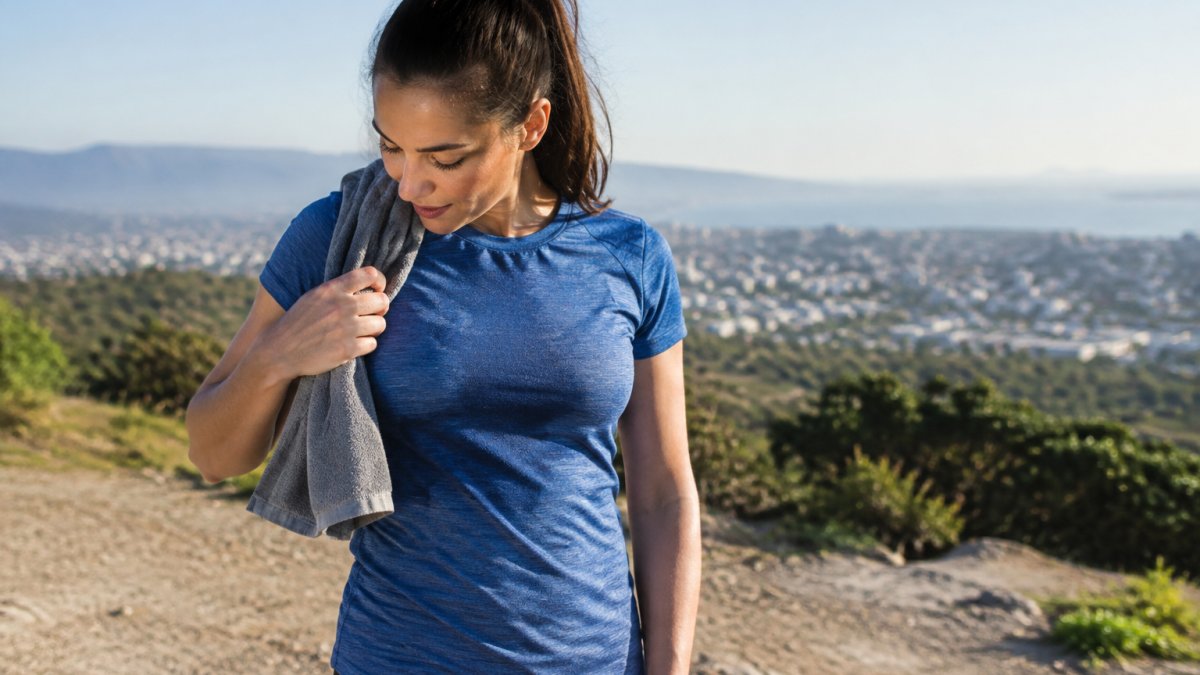
If your team needs print, understand the failure modes first. Our breakdown of why custom apparel printing cracks easily covers the causes and fixes, and our custom logo embroidery step-by-step guide explains how to spec artwork that survives laundering.
A practical decoration checklist:
- Confirm the decoration method suits the fabric weight and stretch
- Request a stitch-out or print sample on the actual garment, not a swatch
- Verify colorfastness against your brand colors after five wash cycles
- Specify placement so the logo clears seams and gussets
Bulk Order Checklist: Sizing, Decoration, and Lifecycle Cost
Build the order around your actual headcount distribution, not an even split across sizes, and treat fit as a performance variable: a garment that is too loose loses skin contact and wicks poorly, while one that is too tight restricts airflow and wears out faster at the seams.
Sizing and fit across a whole workforce
Start by collecting sizes from every wearer rather than estimating from a sample. Where the supplier offers women's cuts, unisex cuts, and extended sizes, capture a preference per wearer so the size run reflects the actual team.
- Collect sizes from every wearer, including women's cuts and extended sizes where offered
- Note fit preference (relaxed vs. tailored) by role, since field crews and front-desk staff often want different cuts
- Add 5-10% overage for replacements and new hires, weighted toward the most common sizes
- Confirm the supplier's size chart is garment-measured, not body-measured, and request a sample in two or three sizes before committing
- Ask whether the same style is available in consistent sizing across colors, so a replacement in a different color still fits the same wearer
Supplier evaluation before you commit
Fabric quality is only half the decision; the other half is whether the supplier can deliver a consistent program. Ask about minimum order quantities per style and per color, standard lead times, and whether those lead times hold during peak seasons. Confirm that colors are dyelot-matched across reorders, because a replacement polo in a slightly different shade of navy is obvious on a team.
- Confirm minimum order quantities per style and per color
- Ask for standard and peak-season lead times in writing
- Verify color consistency across reorders and dyelots
- Confirm the supplier's procurement process for your organization
- Request references from organizations of similar size
Lifecycle cost and replacement planning
Total cost per wear is the number that should drive your decision, not unit price. Estimate it by dividing the garment cost by the number of wears you expect before replacement, and factor in laundering frequency: a uniform washed twice a week reaches end of life far sooner than one washed weekly. Plan a replacement cycle around that laundering rate rather than a fixed calendar, and keep the overage stock reserved for replacements so a single worn-out shirt does not trigger a new minimum order.
- Calculate total cost per wear, not unit price alone
- Base the replacement cycle on laundering frequency and observed wear
- Reserve overage stock for replacements and new hires
- Track which sizes and roles wear out fastest and adjust the next order
That last item matters for public agencies. Our procurement process for branded apparel guide walks through the steps for ordering through an organization. A slightly higher-priced polo that survives two years beats a cheap one replaced every six months, and the sizing and supplier discipline above is what makes that math hold.
Request a Quote and Order Your Team's Moisture-Wicking Apparel
We offer performance polos from Adidas, Nike, Callaway, and Sport-Tek.
Our team provides personalized branding solutions, and we supply custom-made products for agencies and small businesses. Start with the Nike Dri-FIT Players Modern Fit Polo and request pricing for your headcount.

Ready to outfit your team in fabrics that actually perform? Get started with 2mepromo.com and build a uniform program your staff will wear without complaint.
Frequently Asked Questions
What is the most breathable fabric for athletic wear?
Open or mesh knit constructions generally allow more airflow, which helps moisture vapor escape during activity.
Is polyester or nylon better for moisture-wicking athletic wear?
Both are synthetic fibers that move sweat away from the skin, but polyester is lighter and often softer, making it the most common choice for performance polos and tees. Nylon is stronger and more abrasion-resistant, which suits high-wear items like shorts or bags.
What's the difference between Dri-FIT and moisture-wicking?
Moisture-wicking describes how a fabric moves sweat away from the skin, while Dri-FIT is a branded moisture-management technology used in Nike apparel. Dri-FIT fabrics are engineered polyester that pulls moisture to the surface for faster evaporation. In practice, any Dri-FIT garment is moisture-wicking, but not every moisture-wicking fabric carries the Dri-FIT label.
How should you choose fabric for branded team apparel?
Match the fabric to the activity and the decoration method. High-sweat activities call for lightweight polyester or nylon blends; outdoor events may need UPF protection. Confirm that the fabric accepts embroidery or heat transfer without puckering, and check shrinkage and colorfastness after repeated laundering. Order a sample before committing to a bulk run so sizing and logo placement are right.

- Choosing a selection results in a full page refresh.
